A City We Can Afford – The Case For Public Restaurants
In the midst of a child poverty crisis with the issue of affordable, health food at its heart, there has been renewed interest in the idea of publicly run eateries and grocery shops. Adam Johannes, who campaigned for the introduction of free school meals in Wales, makes the case for a food system of the people.
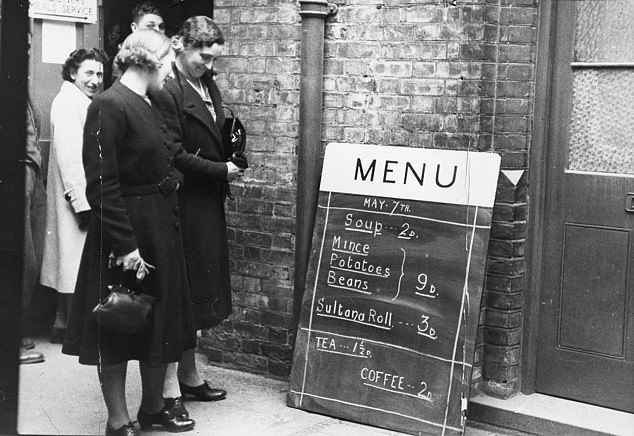
Cover image: a public restaurant in second world war era Britain. Source unknown
Democratic socialist candidate for Mayor of New York City, Zohran Mamdani, has been shaking things up. His campaign for A City We Can Afford has captured international attention with bold, commonsense ideas to tackle the cost-of-living crisis: free buses, free childcare, a rent freeze, and publicly run grocery stores.
The last one is one of his most talked-about proposals: City-owned people’s supermarkets, a publicly-owned alternative to corporate profiteering. His opponents call it “communism”, but it’s really about returning power to the people.
To combat rising food prices, Mamdani wants the city to open its own grocery stores – owned by the public, not big corporations – selling healthy food at low prices by buying in bulk. They’d offer essentials at cost, not for profit. This would make food more affordable and stop companies ripping people off.
Public Diners: Another Piece of the Puzzle
Building on this vision, as a campaigner against food poverty, I want to argue for another idea whose time has come: public diners – a publicly owned restaurant chain where everyone can access a hot, nourishing meal, free from market pressures.
Imagine a society where the high street isn’t dominated by junk food giants, but by public restaurants, owned by us, run by our communities, serving up good, hot, healthy and nutritious food that everyone can afford. Sounds radical? It’s not. We’ve done it before.
We’ve Been Here Before
Before we had a National Health Service, we once had something like a national restaurant service.
During World War II, the UK government opened over 2,000 wartime British Restaurants, serving 600,000 inexpensive meals a day, designed to meet a third of people’s energy needs. That’s more public diners than the number of McDonald’s or Wetherspoons in Britain today, and similar to the number of Greggs.
These restaurants were funded by central government start-up grants and some subsidies but operated on a self-financing basis and were run by local councils. Meals were straightforward and balanced: a bowl of soup, a modest mains course, a pudding, and a cup of tea. Simple, healthy, filling. You could eat in, take it away so long as you brought your own containers to carry it home.
Mobile canteens delivered to air raid shelters and on the streets after bombings, as well as a “Cash and Carry Restaurant” with meals being delivered from a nearby British Restaurant ensured smaller communities weren’t left out. Hundreds would continue to operate after the war rebranded as council run ‘civic restaurants’ but by the early 1970s all had closed.
Winston Churchill himself coined the name “British Restaurant”, rejecting their original name “communal feeding centres” as too redolent of Communism or the workhouse, advising: “Call them British Restaurants. Everybody associates the word ‘restaurant’ with a good meal.”
These weren’t dreary state facilities, they often used existing buildings such as church halls, schools, working men’s clubs, even private homes, and were decorated with murals and contemporary art, and sometimes even art borrowed from national collections.
Fast forward to today: People in the poorest areas are more likely to live surrounded by fast food outlets. We have around 1,400 McDonald’s branches across the UK, serving ultra-processed, unhealthy food disproportionately consumed by low income families. We already have public transport, public libraries, public parks, and hospitals. So why not public diners as part of a modern public food infrastructure? If we have a National Health Service, why not a National Food Service?
Poor diet has overtaken smoking as Britain’s leading cause of preventable death. It’s a public health crisis. Nourish Scotland, a leading advocate for public diners, imagines them as a ‘state supported, affordable restaurant serving healthy, tasty meals to general public’, they write: “Imagine a full-on, sit-down dinner at Greggs prices without all the Greggs guilt. A place you could afford to eat at more than once a week for the rest of your life and not have to worry about it hurting your health in any way. Full flavour, full trust establishments across the country.”
Support is growing. This month, the UK government launched a three-year pilot for two subsidised public restaurants in Dundee and Nottingham. In May, Edinburgh Council passed a motion to explore a public diner scheme of its own.
The question must not be whether we can afford public diners, but whether we can afford not to have them.
So, what would a public diner look like?
Public diners aren’t a radical idea. They’re a simple, powerful expression of what government should do: take care of its people. These should be places where anyone, young or old, working or not, can sit down and enjoy a good, healthy meal without breaking the bank. They are affordable, with meals costing less than a supermarket ready meal. No gimmicks, no pay-what-you-can donation jars.
Just like public transport, where certain groups receive free bus passes or a concessionary rate, diners might use comparable systems to ensure everyone can eat with dignity, but they are not charity. Public diners are universal, meaning they’re for everyone, not just the poor or those in crisis. The goal is to build institutions the whole community can use, benefit from, and support. When everyone uses them, they become more popular, more sustainable, and less reliant on subsidies over time.
Public diners will require some public investment – whether through grants, subsidies, or help with utilities and supply chains to keep costs down. But because they serve a lot of meals per day they can make each meal cheaper. This means they can run smoothly, keep food affordable, and still make it good quality.
Sometimes local councils will run them directly. Other times community organisations will take the lead. Either way, they maintain a formal relationship with the state and are backed by law. That legal foundation makes them part of the local state, like schools, libraries, leisure centres, buses, and parks.
Public diners aren’t here for the short term. They’re not one-off pop-ups or emergency fixes. They’re built to last. With steady public support, they aren’t tossed around by the winds of the market or short-term grants. That stability means people can rely on them, whether they’re struggling, recovering from illness, raising kids, or simply needing a break from cooking. They become part of daily life, rooted in place and relationships.
Public diners strengthen local communities. They bring people together, combat loneliness, and create secure unionised jobs in neighbourhoods that need them most. They’re not dependent on unpaid volunteers or goodwill, they employ trained, paid staff who make sure the space is welcoming and the food is high-quality and nutritious. This isn’t charity. It’s a public service.
They are also accountable. They aren’t owned by corporations or billionaires, public diners are owned by the people. This means staff, customers, and local residents have a real say in how they operate through direct input, community governance, or local authorities. Like community centres, they should be hubs for public life, hosting events, workshops, and even helping small food businesses get started.
Public diners aren’t just about calories. They’re about nourishing people and their communities. Staff understand that mission. They’re not just servers or chefs. They’re community workers, too, people who know their neighbours, who can connect diners to services, campaigns, or simply a friendly face.
Public diners are restaurants. Places you actually want to go. They are welcoming, informal, and warm. You’re greeted like a regular. Staff might know your name. They serve 100 or more meals a day, not just because the food is affordable and tasty, but because they offer something deeper: belonging.
It’s not that people don’t know how to cook or eat healthily, it’s that life gets in the way. Time, energy, money, kitchen facilities, the availability of cheap processed food they’re all barriers. Public diners remove those barriers. No need to plan, shop, cook, or clean. Just show up, sit down, and eat a good, healthy meal, tasty, balanced, and rooted in the culture of your community.
Menus are locally shaped. Ingredients are sourced from regional farmers and ethical suppliers. Meals are seasonal, varied, and climate-friendly.
Raising the Bar for the Industry
As public institutions, public diners raise standards across the hospitality sector. They model how things should be: the Real Living Wage, paid breaks, free hot meals during shifts, trade union membership and workplace cultures that prioritise collaboration over hierarchy. In a sector long plagued by exploitation, they offer a vision of decent, dignified work.
They’re also places of learning. With proper training and apprenticeships, they help the next generation of cooks, bakers, and hospitality workers enter the industry with skills and support, not precarity. In short, public diners show what a publicly owned, democratically accountable food system can deliver: for workers, for communities, for the common good.
Public diners don’t just tackle hunger or poverty, they tackle the climate crisis too. They model diets that are sustainable but still satisfying. They reduce meat consumption, rely on fresh seasonal produce, and keep food waste low by using seasonal gluts and surplus produce
Over two-thirds of the UK’s food waste happens in private homes because food isn’t eaten in time. Public diners help reverse that. They show what a low-waste, low-carbon, community-based food economy could look like.
Many of the ideas here come from the work of Nourish Scotland. Their campaigning is helping bring public diners from imagination to implementation.
When governments invest in the food system, they can help make sure everyone gets enough healthy food, and support farms and food projects run by workers and communities that care for the environment, not just about making money. They also create community spaces where people can come together and feel connected. We don’t have to start from scratch, there are lots of good examples from other countries we can learn from.
Turkey’s Public Restaurants
In Turkey, halk lokantasi or Public Restaurants, are city-run, non-profit cafeterias that serve low-cost, nutritious meals to anyone who walks in. Started by opposition-led councils in over half a dozen cities, since 2022 there are now 17 in Istanbul, these subsidised restaurants tackle hunger, soaring food prices, and poverty. For as little as the price of a cup of coffee, you get hot meals based on staples of Turkish home cooking: soups, legumes, rice, vegetables, meat. Designed for low-wage workers, students, pensioners, and the unemployed, these places are open to everyone. They’re a clear example of food as a public good in an economic crisis.
Poland’s Milk Bars
Bar mleczny, or Milk Bars, have fed Polish workers since the late 1800s. Affordable, nourishing food focused on dairy, grains, eggs, and vegetables served in modest canteens spread quickly and then flourished under Communism, peaking at 40,000 milk bars. Subsidised by the government, they ensured workers had access to hot, nourishing food even if their workplaces didn’t provide canteens. They usually served simple, meat-free dishes at low prices. After Communism fell, many closed, but a revival began in the 2010s. Small, no-frills, decent quality, they appealed to nostalgia, but more importantly, they provided affordable food. Today, most of the around hundred milk bars. are privately owned but still partly subsidised by the state with the condition that the core menu remains affordable, especially for pensioners, students, the poor and low-wage workers.
Mexico City’s Community Dining Halls
In Mexico City, Comedores Comunitarios or Community Dining Halls are a network of around 500 government-backed kitchens – more like neighbourhood cafés than soup kitchens -serving hot, healthy meals that everyone can afford. But they offer more than just food. These spaces are designed to promote stronger communities.
Since 2009, they’ve been providing low-cost meals while also teaching people how to cook, grow their own food, and take care of their health and neighbourhoods. The goal isn’t just to fight hunger, it’s to help people live healthier lives, save money, and feel empowered.
The federal government sets basic standards for nutrition and employment, and funds local authorities to either run the kitchens or partner with grassroots groups, often women-led cooperatives. Key ingredients like beans, grains, vegetables, oil, eggs, and sometimes chicken are subsidised or directly supplied. The government also provides kitchen equipment, enabling large-scale cooking of fresh, nutritious meals. Over 500,000 people are fed every day.
While the programme prioritises support for pensioners, disabled people, mothers, and pregnant women, anyone can eat there. No stigma, no shame. There are even mobile food trucks for university students and special kitchens for migrants that offer not just meals, but also healthcare, legal support, phone charging, and even shoes.
Some dining halls grow food on site, or raise chickens. Others host workshops. They often double as community hubs, places to eat, learn, work, socialise and connect. The result is a more dignified, community-led approach to tackling poverty.
From Free School Meals to Public Diners
Five years ago, the People’s Assembly launched a campaign with a simple, powerful demand: that every child and young person in Wales, no matter their background, deserves a daily hot, healthy free school meal.
We looked at Finland, a country that for over 70 years has guaranteed this basic right to all children and young people, and we listened to the research from the Child Poverty Action Group and the Bevan Foundation, showing clearly: Wales could do this too.
So, we got organised. We built alliances. We engaged communities, brought the issue into the public eye, and took it to the Senedd.
Plaid Cymru got behind it. Welsh Labour resisted at first, voting it down more than once, but eventually they were persuaded. Because people didn’t give up. They pressure on, and won.
This month marks one year of universal free school meals for all Welsh primary school students , 50 million free hot meals served since 2022. That is real progress. That is what people power looks like. But this isn’t the end of the story, it’s the beginning of something bigger.
We’re now working to build a broad coalition in support of publicly funded, community restaurants where everyone can afford a healthy meal. If you want to be part of this fight, email: [email protected]