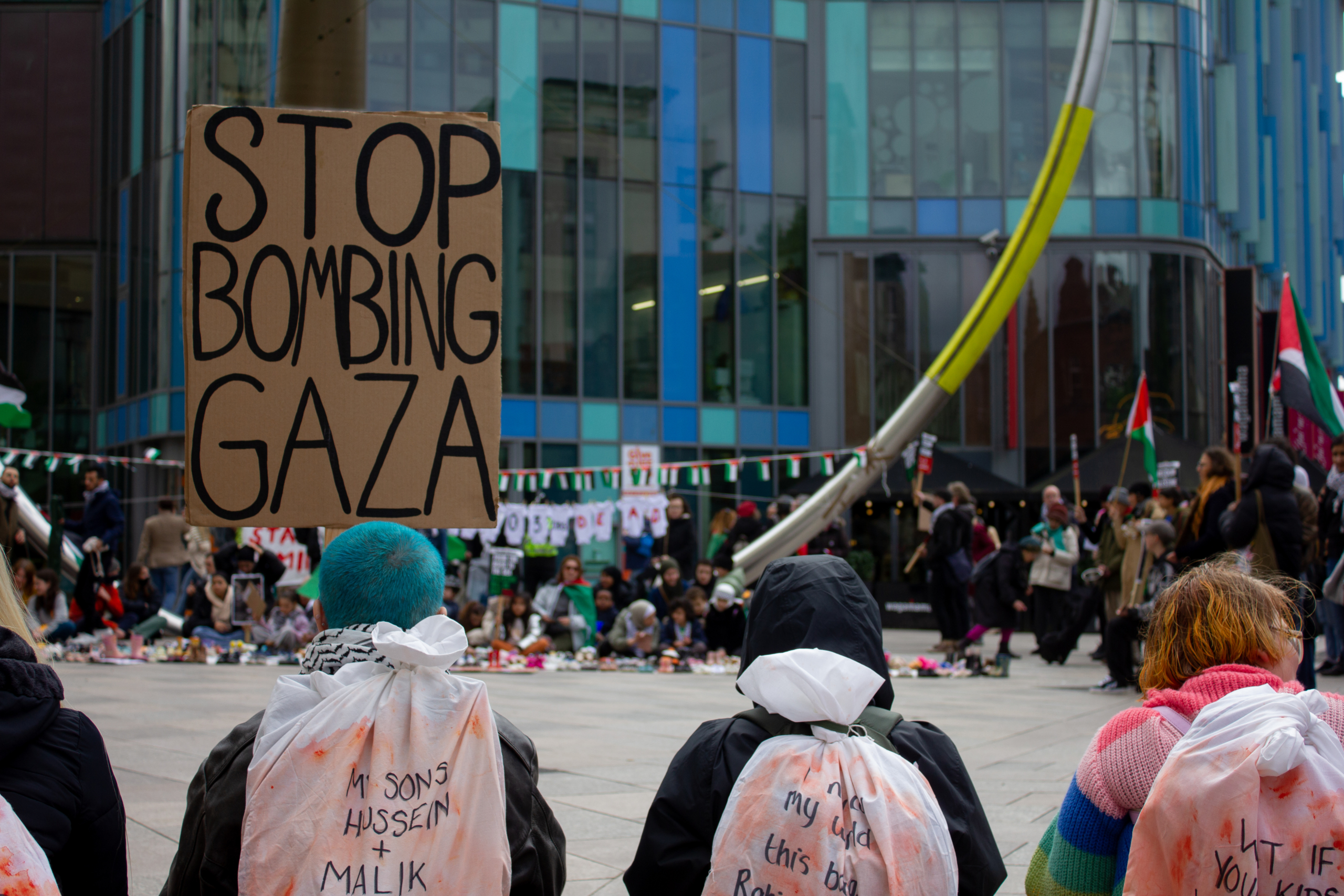
Even with rheumatoid arthritis, I was determined to stand for as long as it took – The Welsh activists trying to overturn the Palestine Action ban
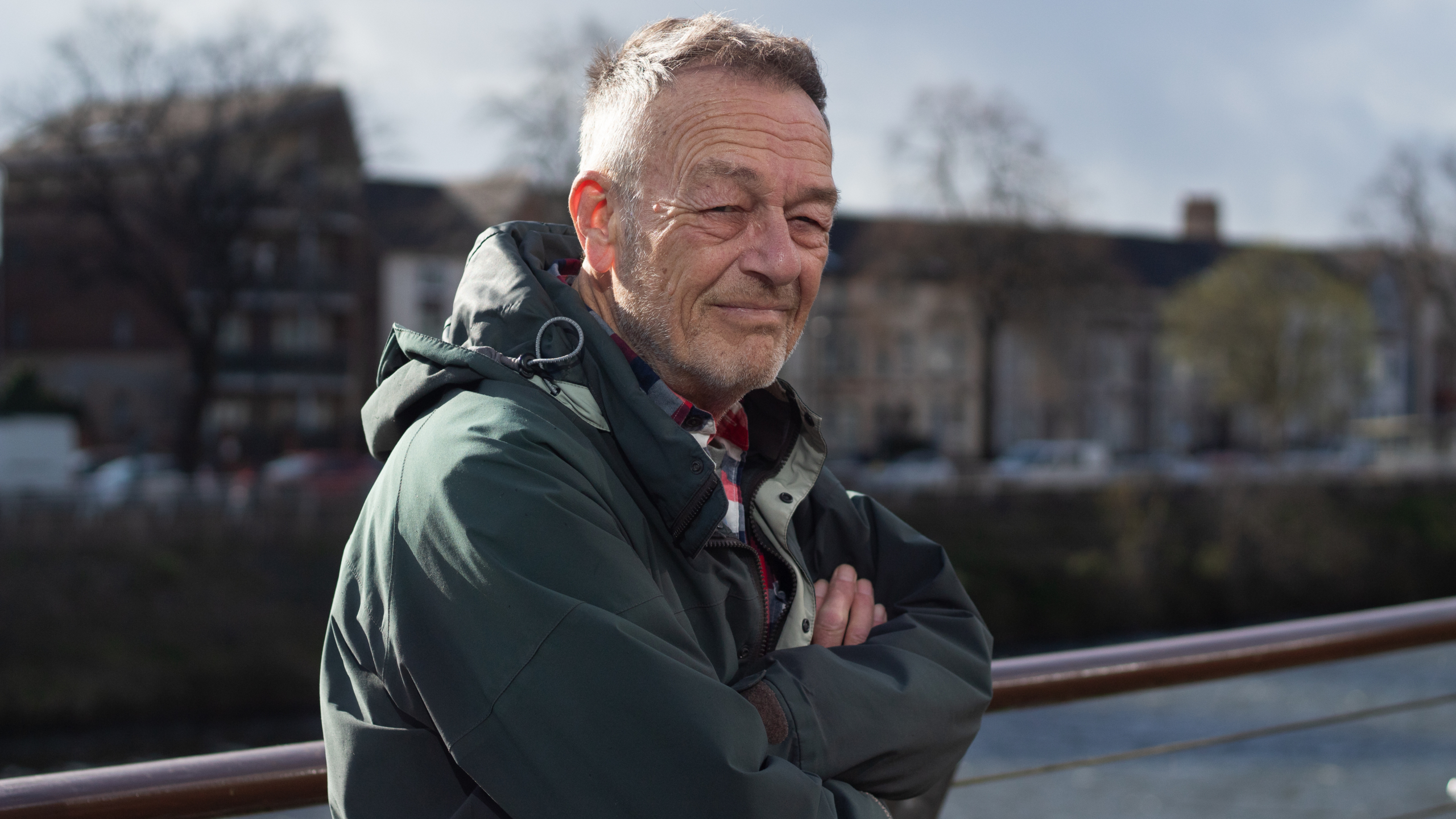
72 year old Terry – “I queued on Millbank for five hours with my arresting officer, to the point where I had to get down on all fours”
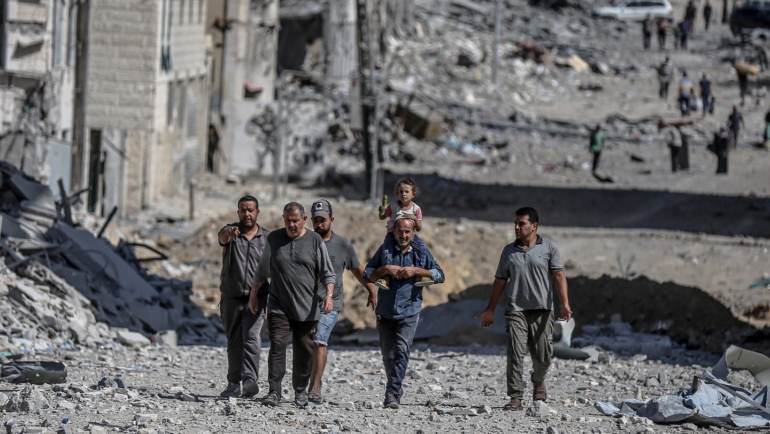
Rachel, 62 – “The genocide was being live-streamed… surrounded by these appalling images of absolute slaughter and of babies and children and families.”
Mike, 79 – “We get a bit of abuse, but mostly nowadays there’s a lot of support”
WARNING: Showing support for Palestine Action now constitutes a terrorism offence under UK law. Please bear this in mind if commenting on this article on social media.
By Ka Long Tung. Cover image, Terry Wilson, by Adwitiya Pal
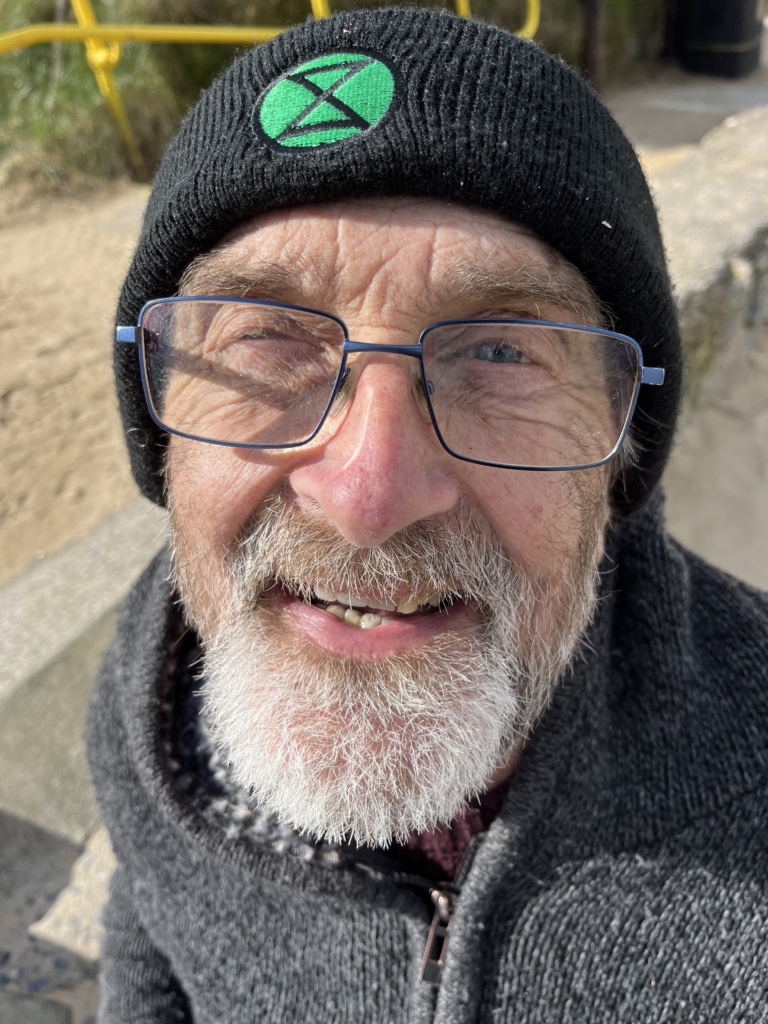
At almost 80 years old, Mike Reed from Carmarthenshire has been an active climate campaigner for years but recently has taken up a fresh cause: Palestine. “When there is a genocide – nearly everyone accepts it’s a genocide – and it’s happening before your very eyes, we all have a duty to do everything we can to stop it.”
By joining local and nationwide rallies and marches, protesting outside supermarkets selling Israeli products and arms factories supplying weapons used in the genocide, huge numbers of people have been taking various actions to call for an end to the killing in Gaza. “You just do everything you can really,” says Mike.
Along with a small number of activists, Mike has protested outside local shops that sell Israeli produce, and it has not always gone smoothly. On one occasion, some workers inside escalated the situation by calling the police. Mike and others continued their peaceful protest, but as he recalls: “We have a few people who are very abusive… we get a bit of abuse, but mostly nowadays there’s a lot of support.”
But whatever hostility he faced didn’t deter Mike, who not long later found himself up against the UK Home Secretary and risking arrest for his pro-Palestinian activism.
Rachel Stubley, 63, based in Newport, is a former college teacher who had only been on two Palestine protests some years ago. She describes her previous understanding of suffering in Palestine as “theoretical”. “I knew about it in that way that we know about lots of bad things that happen in the world,” she says. “But it doesn’t feel like in your heart, and it doesn’t feel like it’s your tragedy.”
Since the genocide, she says she has learnt more about Palestine, and “it’s gone from a theoretical wrong to something that I feel in my fibres.”
“The genocide was being live-streamed… surrounded by these appalling images of absolute slaughter and of babies and children and families. So I could understand.”
She has since become an active campaigner for Palestine and has attended rallies, marches, and pickets outside arm factories. The desire to make an impact could at times turn into frustration. “I still think marching, and those huge marches were and are really important,” she says. “But for me personally, I felt quite sickened about going on them and then feeling like they weren’t even being reported, and nothing was changing.”
“I wasn’t going to get involved in the kind of protest of throwing paint and stuff, but nevertheless, I could understand why they were,” she says. “The genocide was being live-streamed… surrounded by these appalling images of absolute slaughter and of babies and children and families. So I could understand.”
On 23 June 2025, the then Home Secretary Yvette Cooper announced that the Labour government intended to proscribe Palestine Action under section 3 of the Terrorism Act 2000.
The move came after Palestine Action broke into RAF Brize Norton in Oxfordshire, and sprayed paint into two Voyager aircraft. According to Declassified UK, Cooper had already been advised in March by the government’s Proscription Review Group and the Joint Terrorism Analysis Centre to ban the group. The advice was based on three out of a total of 385 incidents, involving “serious property damage” to arms factories.
Not long later, on 2nd July, Parliament voted in favour of the order, which was also bundled in with banning two neo-Nazi groups. Effectively, it meant that supporting Palestine Action would become a criminal offence with a potential 14-year sentence from midnight of 5th July – the first time a non-violent, direct action group has been designated a terrorist organisation in the UK.
For Terry, whose work involved dealing with family courts, the proscription was “utterly without merit”. He recalls his reaction after the announcement: “It’s a feeling that we’ve passed from what I used to think was a democratic state into one which isn’t. It’s gone past the point of no return there.”
As anger over the ban spread, the activist group Defend Our Juries, which has previously supported the actions of Just Stop Oil and Insulate Britain, coordinated the Lift the Ban campaign with a series of dramatic protests in the space of just a few months.
Terry decided to join two protests and was arrested, first in London, then in Cardiff. While he was always aware of the genocide in Gaza and attended the meetings of the Palestine support group in his area, prior to joining this civil disobedience, he had not participated in marches and rallies. He humbly says: “I haven’t played any active part beyond my armchair.”
When Rachel made the decision to join one of the Lift the Ban protests in London, she was on holiday overseas. Holding the placard and getting arrested would be one of the first things she did after coming back to the UK and before heading back to Newport.
“I think this is worth getting arrested for because it’s really making an absolute mockery of the law,” says Rachel. She was arrested in London as well as Cardiff.
She remembers she was particularly sickened by the complicity of politicians when they celebrated the anniversary of the suffragette movement by wearing sashes, coincidentally made by a Newport-based group, in front of Westminster Hall. It came at the time when Palestine Action was banned.
“I totally celebrate that as well,” Rachel says. “But what sickened me was they were celebrating direct action”. She realises that the suffragette success was based on a series of acts of civil disobedience. “They were doing violent things. They smashed all the windows in Regent Street. Lady Rhondda in Newport blew up a post box.”
But while the ban on Palestine Action is seen by many as a democratic outrage, being convicted under the Terrorism Act can be too much of a cost. Mike reflects that it is not a light decision to make. “If you’re working and if you’re young, and you may want to travel and you’ve got issues at work, then it’s something which is a tremendously difficult decision to make,” he says. “For me, I’m a retired criminal lawyer, and so I go by my conscience, and I go and do what my conscience tells me, and I believe this is the right thing.”
“It was such a bullying thing to do, to actually say that those brave people who went to the Elbit factories to try and stop the genocide were called terrorists.” With his discontent with the ban, he joined two protests in London and came to Cardiff to support the protesters.
Prior to the proscription, many direct actions for Palestine and other social justice issues had already come with consequences of criminal charges. Even more moderate opponents of the ban have pointed out that existing laws are already sufficient.
After the beginning of the genocide in 2023, traditional, non-violent protests have also become a field of arrests. In Cardiff, for example, 19 people were arrested in relation to pro-Palestine protests in 2024. They were later charged in court. At the time, they said in a statement that the charges were “an attempt to intimidate and scare activists into silence, and to set an example to all those who are as equally appalled by our government’s disregard for human life and the earth we inhabit.”
voice.cymru also reported the arrest of a Palestinian-Welsh activist by plain-clothes police.
While using legal power to police the protesters, the government also tried to brand the movement calling for the end of the war as wrongful and unethical.
After a tragic attack on a synagogue in Manchester last October, Home Secretary Shabana Mahmood said protests for Palestine should be called off, calling them “fundamentally un-British”.
By linking the protests to the killings of Jewish people, the Home Secretary at the time said: “To anybody who is thinking about going on a protest, what I would say is imagine that is you who has had a family member murdered on the holiest day of your faith.”
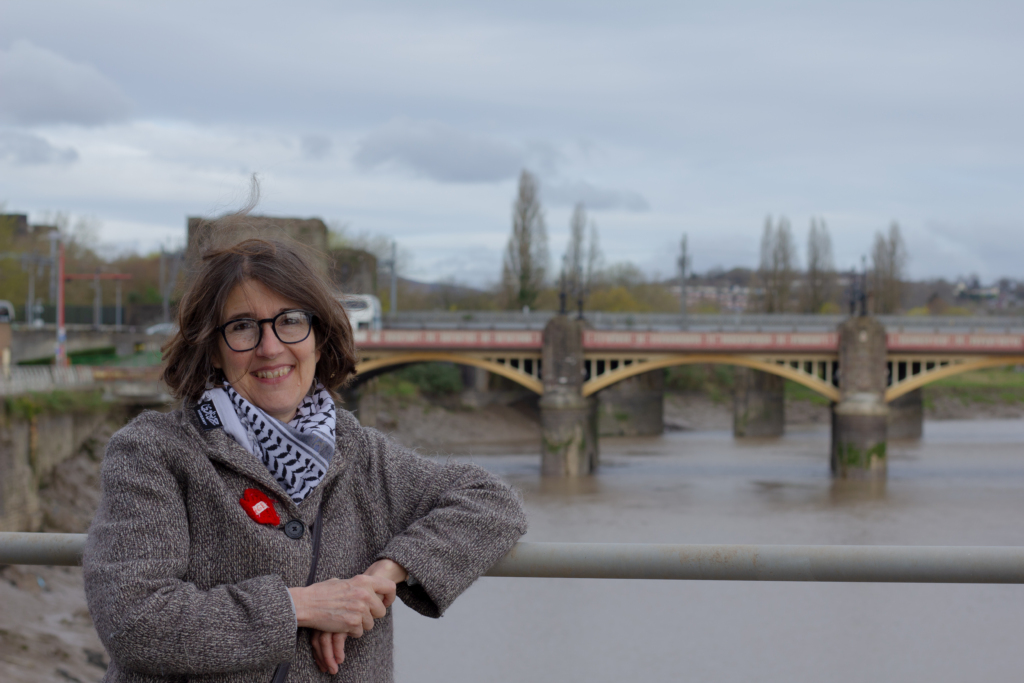
Rachel remembers the incident vividly. Her voice becomes shaky: “It sounds crazy, but I could still cry about it. And I think it’s not because I need to be seen as British, but it was the hypocrisy. It was so unfair”.
She continues: “It wasn’t so much the arrests that scared people off, but it was the saying ‘You are being anti-Semitic, you are being un-British, you are not letting people grieve’. That was so unfair”.
With the existing law enforcement and the use of rhetoric, the terrorist framing of Palestine Action was not seen as an isolated event, but an escalation of what the state had already been doing to curb the challenge to its involvement in the genocide.
While the government emphasises Palestine Action is violent and people do not know its “full nature”, the proscription resulted in many who would not even commit direct actions and might prefer traditional forms of protest coming out to the streets.
Terry emphasises how the peaceful nature of the Lift the Ban protests reflects the problematic ban. “We are doing it in order to show that we’re offering no resistance whatsoever,” Terry says. “The whole thing about the Defend Our Juries protests is that they’re silent”.
“We are sitting here together because we all share the same feeling, which is that you’ve made a law which is wrong”.
Although being arrested, Rachel is grateful for the warmth that she received. “There’s a lot of observers, a lot of supporters, a lot of welfare people. The atmosphere has often been really great. You feel very supported.”
“There’s always been a pro-Israel counter thing. And they’re shouting a lot, but again, outnumbered. So it’s not really bothered”.
In August 2025, Palestine Action won permission to challenge the ban. On 13th February, the High Court ruled that the proscription was unlawful in the Judicial Review, days after Palestine Action activists werecleared of aggravated burglary over a break-in at the Elbit factory near Bristol.
Although the ruling came in favour of Palestine Action, the whole hearing process appeared controversial. In a last-minute change, Mr Justice Chamberlain, who granted permission for this judicial review and the challenge to the UK’s sale of aircraft parts to Israel, was replaced in hearing the case. With this change, Terry says he has “gone from feeling very confident the judicial review will go our way to feeling not very confident at all”.
“I have to consider the possibility that our government has been able to cherry-pick judges that are more to its liking in specific cases”
His worry goes beyond the case of Palestine Action. “I used to think British justice was well served by its constitutional separation of legislature and judiciary, but now I don’t feel very sure at all because I have to consider the possibility that our government has been able to cherry-pick judges that are more to its liking in specific cases, which is even worse than the American system,” he adds.
Following the ruling, however, the ban on Palestine Action remains in place, and the Home Office has been given permission to appeal. Since then, the Met Police has reversed its position and resumed arrests of supporters of Palestine Action. On 11th April, another mass arrest of 500 people happened in London.
To date, over 3,000 arrests have been made for holding the sign of “I oppose genocide. I support Palestine Action”. Whether those who have been arrested will be categorised as “terrorists” is still unknown.
The government’s appeal against the High Court ruling is being heard this week, beginning on Tuesday 28th April. While there is no way to predict what the decision of the judges will be, Rachel remarks on the importance of speaking out. “It’s not even just about whether it will work. It’s that you feel like you have to do it so that people see that we’re not going along with it. At least you say this is wrong, even if nothing changes, no one can pretend that that is right,” says Rachel.