
“Independent, Socialist, Republican” -Are The Greens About To Seriously Shake Up Welsh Politics?
As the Wales Green Party prepares to contest its most significant election yet, Adwitiya Pal sits down with leader Anthony Slaughter to talk about the party’s resurgence under Zack Polanski, working-class voters in the valleys and why he still believes — like the anarchist punk he once was — that things don’t have to be this way.
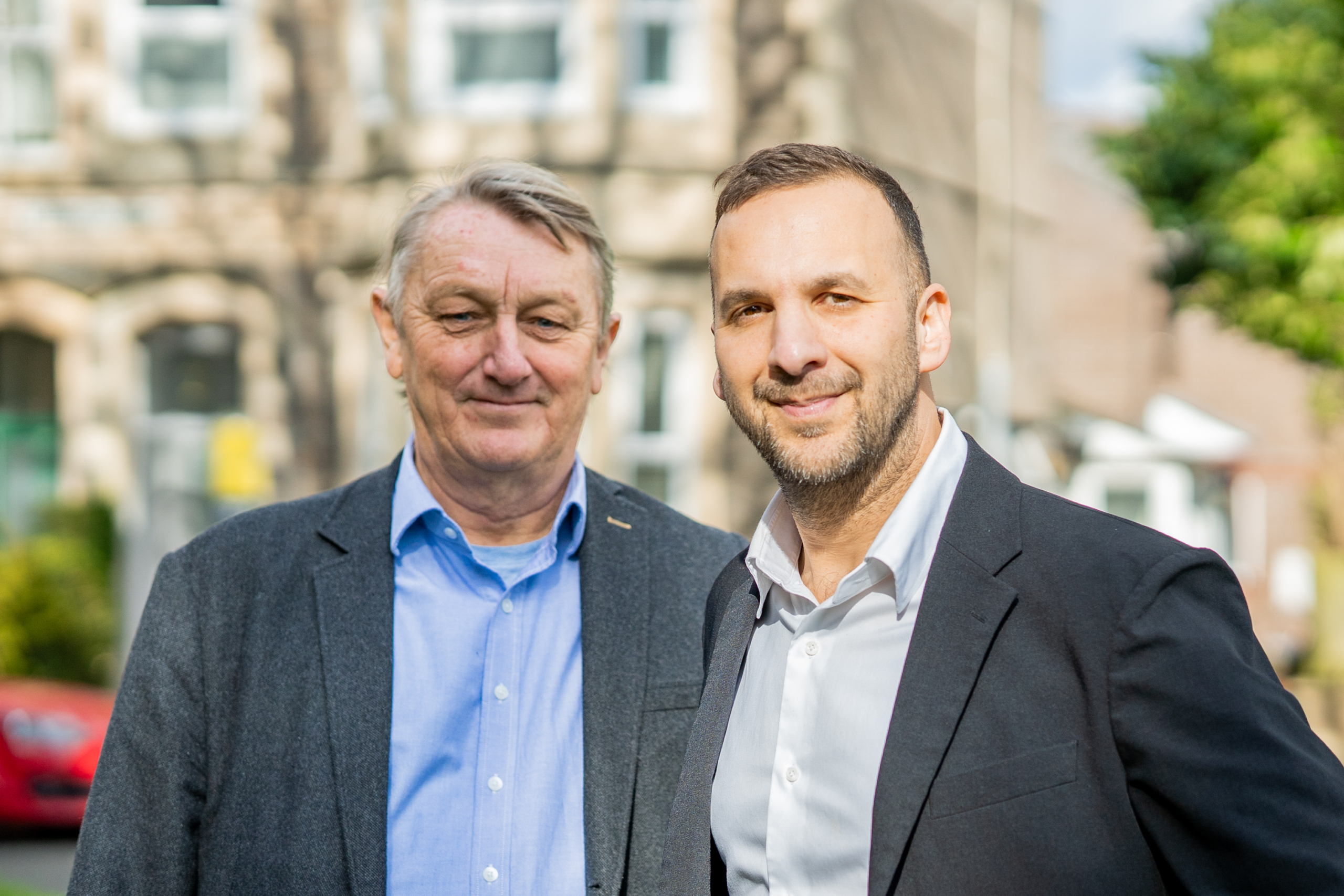
By Adwitiya Pal. Cover image, Anthony Slaughter and Zack Polanski by Jamie Bellinger
From never being elected to a Senedd seat to potentially playing a key role in brokering government, the 2026 elections are looking like a big step up for the Wales Green Party. And one of its candidates certain to take oath at the expanded Y Siambr this May is Anthony Slaughter, representing Caerdydd Penarth. As the leader in Wales, he’s also a key figure in a party that has boomed to popularity in the last few months.
Dressed in a brown blazer jacket and with a big old tote bag slung over his shoulder, the 64-year-old, who was born in Yorkshire and grew up in apartheid South Africa, takes a seat across the table. My first question to him is probably the most difficult of our hour-long chat: “Favourite punk album?”
After a long, hard think, he says, “It’d have to be London Calling by The Clash.” My follow-up, ‘Clash or Crass?’ — both seminal punk bands of their era — is one that is quite often divisive for many fans of the genre. But for Anthony, it’s easy. “Clash,” he answers without skipping a beat, eyes lit up with an exuberance that might have dissipated over the years, before the politician scrambles to recover from the supposed betrayal of diplomacy, saying: “Although, Crass were a big part of my life as well…”
Crass were indeed quite a big part of his life. After forming a punk band in Cape Town called Riot Squad SA (their 1981 EP Total Onslaught delivers blistering lyrics aimed at the South African government with crunchy, distorted guitars), he returned to the UK to avoid two years of conscription in the “apartheid army” of the South African Defence Force, thanks to his dual citizenship.
His next stop was London, where he met up with other members of the anarcho-punk squatting scene and moved into a big, abandoned house in Hackney with members of the anti-fascist avant-punk band Crass. That’s also around the same time he became aware of the Greens, but true to his anarchist ideals, wasn’t too keen on participating in liberal democratic politics.
All that changed when he moved to Penarth in the early noughties. Working as a garden designer and also chairing the local environment group Gwyrddio Penarth Greening, he found himself attending a Green Party meeting and soon, contesting the Cardiff Council elections. Just a few months later, he was the Green candidate for Cardiff South and Penarth in the Westminster by-election.
Fast forward to the 2024 General Election, and he came in second behind Labour’s Stephen Doughty. In just over a month, Slaughter is all but certain to be voted to the Senedd from the newly formed Caerdydd Penarth constituency.
It would be easy to attribute this to the Greens’ soaring popularity in national polls under the leadership of Zack Polanski since September. But Anthony is quick to remind me that it’s not an overnight change, but “a lot of hardwork from some very dedicated people”. He adds that former leaders of the party and two of its five current MPs, Carla Denyer and Adrian Ramsay, “did so much of the groundwork to get the party into a position where when it did explode, we were ready for it.”
One of the party’s five MPs is, of course, Hannah Spencer, recently elected to Westminster from Manchester in the Gorton and Denton by-election — a result which has seemingly left the Labour Party rattled and sent a clear message cementing Greens as not only a popular alternative to the incumbency, but also a viable option to stop the rise of far-right Reform UK.
Taking a break from the non-stop door-knocking and leafletting in and around Cardiff, Anthony travelled up to Manchester to join Hannah’s campaign for a day. “For mobilisation to happen so quickly just showed that the Green Party is operating at a different level of professionalism nowadays,” he says. “But what was interesting was going around and knocking on doors, speaking to people in both Gorton and Denton, and it sort of mirrored the same sort of discussions that we’ve been having in Cardiff.
“People were fed up with being taken for granted, they were fed up with Labour complacency. There was worrying support for Reform on the doorstep, but there was also this recognition and acknowledgement that the Greens were actually in a position to replace Labour and stand up to Reform.”
Despite the nerve-wracking nature of the polls, the result was clear — Hannah led with 40.7 per cent of the votes, with Reform’s Matt Goodwin second with 28.7 per cent, and Labour’s Angeliki Stogia third with only 25.4 per cent — in a seat that Labour had held for almost 100 years.
Anthony adds: “What it did show is that there isn’t really anywhere we can’t win anymore if we put our minds to it.”
The Wales Green Party have already shown that. In the Grangetown by-election last August, the party’s candidate Matt Youde managed to edge out Labour’s Khuram Chowdhry, with a phenomenal local campaign.
The latest YouGov poll expects them to win 10 out of 96 seats in the Senedd, placing them fourth behind Plaid, Reform and Labour. Anthony believes that there will be “a significant number of Green Senedd members”, but he is adamant on not giving me an exact number that they’re expecting or even targeting, urging that he wants to “manage expectations”.
Perhaps more interestingly, Plaid Cymru is expected to win at least over 40 seats, meaning it would be in a comfortable position to form a minority government alongside the Greens, pitting Reform, Labour, and Conservatives in the Opposition.
Polls, of course, are never the same as the results. In the passionately contested Caerphilly by-election in October last year, Reform were touted by many to win their first seat in the Senedd — only to be resoundingly beaten by Plaid. The Greens came a distant fifth with only two per cent of the vote, behind even the Conservative candidate. For most party leaders, that sort of performance would be a cause of concern, but Anthony has a different point of view.
“Journalists phoned me the day after to ask if I was disappointed with that result. And I said, no, the people of Caerphilly have given Wales the best result they could have. They’ve come together and stopped Reform. I know we had a candidate, but I also know that quite a lot of Green voters voted for them [Plaid]. A lot of Lib Dem voters voted for them. I’ve even heard anecdotal stories about some Conservatives voting for Plaid in that election.”
Anthony is also keen to point out that Caerphilly was the last time anyone was getting elected to the Senedd under the First Past The Post voting system, which will be replaced by a form of Proportional Representation in May, meaning the top six candidates from each of the 19 overhauled constituencies will be elected to form the Welsh Parliament.
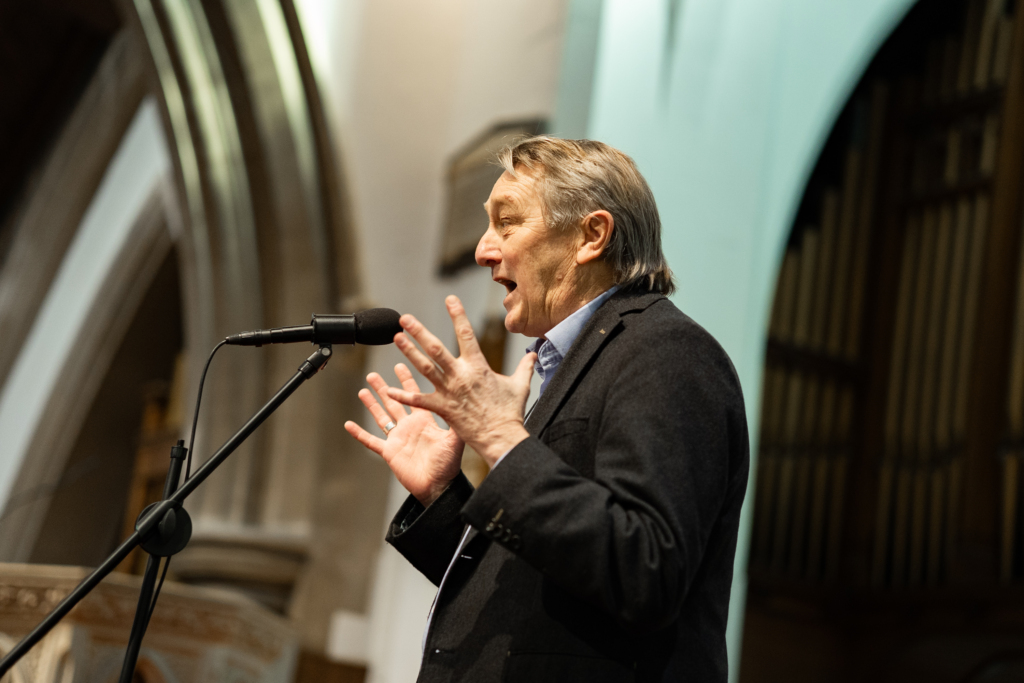
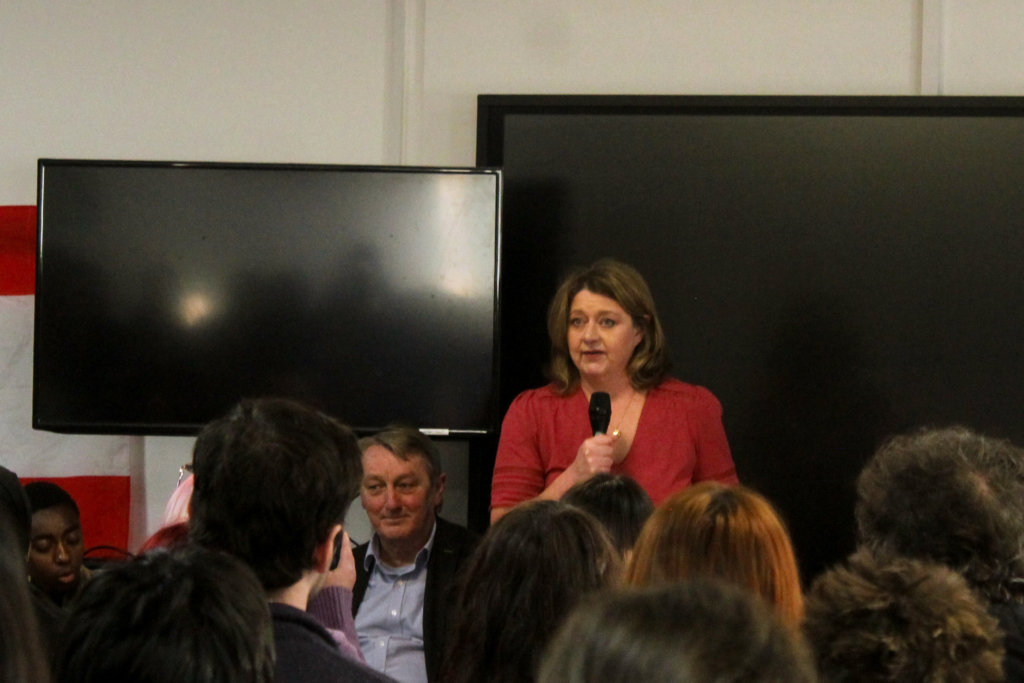
Zack Polanski, speaking at the launch of Together Cymru, an alliance made up of hundreds of organisations against the far-right on 14 March in Cardiff, also agreed with this sentiment, envisioning a Welsh government led by Plaid Cymru and backed by the Greens. Also speaking at the event was Sioned Williams, Plaid Cymru MS for South West Wales, who stressed on the need for unified diversity in the burgeoning left-wing movement, arguing that no one party should have dominion over progressive politics.
To many, this may signify the last rites of the long-established binary two-party system of the country, but does this also mean we are looking at a different set of politics entirely, one based on mutual co-operation and syndicated partnerships, rather than hegemonic self-preservation?
“We’re seeing an increasing understanding of the importance of solidarity across different issues,” Anthony says. “People fighting for justice for Gaza will also be fighting for justice for victims of climate change. We have a government in the UK that is actively complicit in the genocide. This goes back to my growing up in apartheid South Africa and knowing what injustice looks like.
“It’s a growing sense that things have got intensely unfair and unjust and they don’t have to be that way… The establishment has taken working-class people for granted for far too long. They’ve thought that they’ll vote for us, they’ve got nowhere to go. That’s where we come in.”
Anthony says that Plaid Cymru would have the Greens’ backing to form a minority government, and although there haven’t been any talks about whether it would look like a coalition government, a co-operation agreement or simply a vote of confidence, he says that having Plaid Cymru’s leader Rhun ap Iorwerth as the First Minister would be “incredibly significant”.
In fact, they do agree on a lot of things. To begin with, both parties are united in their goal for an independent Wales. He says, “The current devolution settlement is nowhere near enough. As a minimum, we should have parity with Scotland in terms of powers. But that doesn’t mean the Senedd shouldn’t be doing more with the powers it’s got. The levers it’s got, inadequate as they are, haven’t been used to their fullest extent, despite Labour governments in both Cardiff Bay and Westminster.”
Both parties also agree that the next four years however, isn’t the correct time to call for an independence referendum. “It would distract from the important work that has to happen first,” Anthony says. “It could be so divisive that it lets Reform in next time around. It doesn’t mean we don’t stop working towards it, but the first step towards working towards an independent Wales is making life better for the people of Wales, showing them that Wales can be governed differently.”
“We firmly believe in it as a party, but that’s not what this election is about,” he says, adding that it’s inevitable that Wales Green Party will become a separate party at some point, but forming a family with the Greens in England, Scotland and north of Ireland.
But do Plaid and Green agree on everything? Anthony doesn’t think so. “I believe Plaid are being very cautious right now, and understandably so, because they want to make sure that they win. But they’re not being as bold or radical as we would be. What resonates quite often with progressive voters is we get a Plaid government, even if it’s a minority government, but then have a significant group of Greens pushing them.”
And that’s the merit of the new proportional representation voting system. He says, “If someone who’s torn between voting Plaid and Green goes and votes for us, they’re not taking a seat off Plaid. Every Green MS is one less Reform MS.”
The elephant in the room, then, is what happens if Plaid and Greens don’t have adequate members to form a government in May. He replies, “If Reform turn out to be large enough, which I sincerely hope they don’t, we would all have to work together. There’s talk of a progressive rainbow coalition between us, Plaid, Labour, and who knows, maybe the Lib Dems would be there,” before adding, “I’m trying not to sound too cynical, but it [considering Labour as part of the progressive coalition] is stretching the word progressive at the moment… As the polls suggest and also what we’re hearing, Labour wouldn’t be significant, but we would have to be grown up and look at the situation after.”
If you were to believe the national polls, it would appear that Reform’s meteoric rise has hit a ceiling. It also hasn’t helped that in a recent video, party leader Nigel Farage was seen mocking the Welsh language as “foreign”. Nor the fact that the party has only announced its candidates last week, with just over a month to go before the elections.
In another rather awkward update last week, journalist Will Hayward revealed that Reform UK Wales was struggling to mobilise its supporters in Lliswerry and Blackwood, where its new leader, Dan Thomas, is based. An email sent to members read: “Out of 1,400 members and supporters in our branch so far only eight have said they will help campaign this weekend. Five of these eight are the committee members. Unfortunately this is typical of the response we get.”
It also doesn’t help that Dan Thomas is a former Tory politician since 2006, defecting to Reform only last year. He’s not the only one — the party’s top ranks are occupied by the likes of Robert Jenrick, Nadhim Zahawi, Suella Braverman, and Danny Kruger — all former Conservatives.
“It undermines their whole stance,” Anthony says. “We always knew that Nigel Farage is establishment. He managed to convince a lot of people that he isn’t. But now, they cannot present themselves as the rebels, the anti-establishment, when it is just a retirement home for failed Tory politicians.”
Anthony tells me that while campaigning for the Grangetown by-election, he came across several people who surprisingly told him that they haven’t decided yet, but ‘it’s either you or Reform.’
He explains: “There’s a sweeping anti-establishment sentiment amongst the masses — none of the above parties. We’ve got that claim, as Wales Greens, to be the insurgents since we’re not tainted by the 26 years of failure. To some extent, Plaid have been part of that. But on a basic level, people are saying, ‘yes, I’ve had enough of the other parties.’
“But then what Reform are doing is they’re feeding into that, because people are hurting. People can’t afford to pay their bills, they can’t afford their rents, they’re working precarious jobs. What Reform do is offer them a group of people to blame for that. Whereas what we offer is a different, bold way of governing that recognises people’s needs and answers to them.
“That is exactly what Hannah offered. It’s recognising people’s despair, recognising people’s anger, but offering hope and practical solutions, not blame.”
From the outside, it might appear that since Zack became the leader of the Green Party, its tone and messaging has been rebranded to focus more on working class issues, adopting radical socialist ideals, and levying a non-stop, fierce barrage of attacks at the government — what some might describe as ‘leftist populism’. He’s also brought a lot of media coverage and attention to himself and the party, and dealt with the liberal media’s pushback head-on. But while Anthony recognises that Zack has “turbocharged” the party, he also wants to relay that their core principles have remained the same.
“We never stopped talking about the environment or climate or nature. It is core, key to who we are. But there’s that strong recognition that everything’s connected. So there is no climate justice without social justice, without economic justice, without racial justice. They’re all interconnected.
“And I got a lot from journalists when Zack was first elected was that ‘he’s changing the party base’. Zack isn’t making up policy. Everything Zack says was already Green Party policy.”
Anthony recounts to me a story of a young lad at a Wales Green Party camp, who came up to him and asked, ‘I live up in the Valleys, I can’t knock on people’s doors and talk about climate change and global warming.’
“And I said, no, you’re not. You’re going to knock on people’s doors and you’re going to talk about affordable heating because we want to insulate their homes. You’re going to talk about affordable, if not free, public transport so they can get around in these communities that aren’t very well served by public transport. You’re going to talk about affordable, sustainable, healthy food for their children. You’re going to talk about air quality that doesn’t kill their children.
“I think it’s that sense of climate crisis impacting the most vulnerable communities first, whether that’s internationally in the Global South or whether it’s homes at risk of flooding in the Valleys, not being able to get insurance, struggling to pay their bills and living under the fear that they could get evicted at a week’s notice.”
Despite Westminster as well as right-wing groups driving up hateful rhetoric, using every trick in the playbook to sow seeds of division — from Starmer’s infamous ‘Island of Strangers’ speech to Reform’s manifestos for Wales and Scotland — Anthony says that he believes “most people are decent and they care” and that it’s up to political parties to counter the right-wing movement by “creating spaces for marginalised communities to come to the forefront and speak for themselves.”
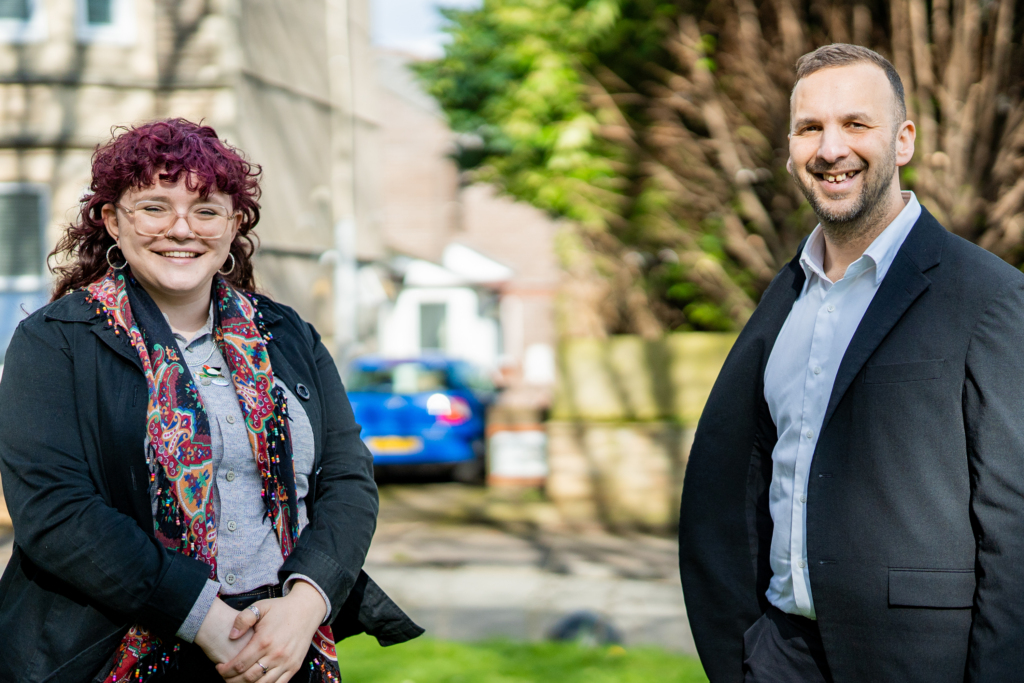
“We want everyone in Wales to see some Green candidates that represent them,” he adds, before the conversation shifts to Tessa Marshall, a young, Welsh-speaking queer, disabled campaigner who’s standing as the second Green candidate in Caerdydd Penarth, and someone who’s Anthony very keen on getting elected. “She’s a long-standing campaigner for the environment, equality, LGBTQI and disability issues, and known very well across Cardiff. She’s also very, very formidable when it comes to policy… The Senedd won’t know what’s hit them!”
Of course, it’s not all rosy. Questions have been raised on the national party’s policy on Nato, an organisation that jars with anti-war activists on the ground and whose head recently came out in support of the US/Israeli war against Iran. Anthony says, “At our core, we are a pacifist party that believes in global solidarity, but also as we mature and become a bigger party and get closer to power, it’s about recognising that things sometimes are quite messy.”
He argues that the party recognises the need for international alliances, but “the ones we’ve got at the moment aren’t fit for purpose”. “In a way, ironically, Donald Trump has made that argument for us now,” he says. “When you’ve got a military alliance where one of the most powerful members is threatening to invade another if they don’t do what they say, then that alliance isn’t really working.
“And if you’ve got the leader of the United States, on and off, actively encouraging President Putin and his illegal war of aggression, and now illegally bombing Iran alongside Israel with impunity, it gets harder and harder to argue. So we need to find a way of working together with friends and neighbours. And it’s not easy, but it’s clear that the old model of two or three strong countries dominating an alliance isn’t working.”
And then there’s the thorny matter of defections. For all the criticisms aimed at Reform being a “retirement home for failed Tory politicians”, there hasn’t been a lack of Labour politicians joining the Greens. A number of London councillors have defected to the Greens over the last couple of months. The Guardian reports that several left-leaning Labour MPs, dissatisfied with the party’s direction under Keir Starmer’s leadership, are in talks to join the Greens. Zack himself has gone on record, saying that he’s actively having conversations with them to get them to switch sides.
On 7 November 2025, Cllr Rob James, former leader of the Labour group at Carmarthenshire council, became the first Labour councillor in Wales to defect to the Greens. Three days later, he was joined by Cllr Sean Morgan, former leader of the Caerphilly council. Morgan had previously stepped down as the council leader and tore up his party membership, claiming he had become disillusioned with Labour and found the party’s values no longer matched those of “ordinary people”. His “biggest criticism” of Labour was that “they are complicit in a genocide” and “ethnic cleansing”.
While both Zack and Anthony have warmly welcomed those jumping ship, there’s the question of former Labour politicians carrying the undesired baggage of austerity politics along with them. Just a few months before his defection, Cllr Morgan had come under heavy fire for his decision to close ten libraries across Caerphilly and replace them with six new ‘hubs’. Campaigners opposing the library cuts had argued that smaller communities would be the worst-hit by the closures, arguing that the move represented a return “back to Victorian times”.
“People who share our values are welcome in the party. There are a lot of people who’ve just kept giving Labour the benefit of the doubt and they’ve had enough now.”
It’s a question he doesn’t fully answer, and perhaps can’t yet. The Greens’ pitch rests on being something genuinely different — untainted, and insurgent and values-led. Whether that survives contact with the complexities of real political recruitment is yet to be seen. For now, he is focused on what’s immediately ahead.
I ask Anthony what he wants to achieve as the leader of the Wales Green Party. “Change Wales is the short answer… We first need to make sure that we get a good group of Greens elected to the Senedd. And then starts the hard work. The first 100 days are crucial to making our mark, showing that we are going to do politics differently. We are going to push the next Welsh Government harder and hold them to account.
“And in five years’ time, I want that work to have paid off. I want people to have seen that having Greens in their national parliament has made a difference to their lives, their communities, and to nature. And then have a significant group of Greens in Westminster from Wales, England and Scotland. We will be the voice of change, we will be one of the major political forces on these islands.”
He adds: “My vision for Wales is an independent, small, socialist, republican country, working together with other small countries across the world to tackle the crisis facing us. A country where equality matters, families don’t have to worry about paying their rent, workers can organise in their workplace, and free from racism, homophobia, and transphobia.”
It’s a vision that would have felt familiar to the young man squatting in Hackney with anarchists, even if the route he’s taken — electioneering, door-knocking, politicking, and leading a major national party — would have seemed unthinkable to him then.
As our conversation winds down, I ask him about the anarcho-punk scene of his youth — the squats, the bands, the intensity of it all. He smiles. “Very full on, very intense, very angry… a very, very confusing time, but also a lot of fun.” After a pause, he adds, “We’re back there again now.”
Open Letter To Labour MPs – What Have You Done To Stop Starvation In Gaza?