Labour Are Finished, But Who Will Capitalise In Caerphilly’s Crucial By-Election?
As voters prepare for one of the Senedd’s most anticipated elections of recent times, with Reform and Plaid Cymru neck and neck, SC Cook talks to people in Caerphilly about what is motivating them ahead of Thursday’s vote
It might sound like a cliché, but for Peter Jones it’s absolutely true.
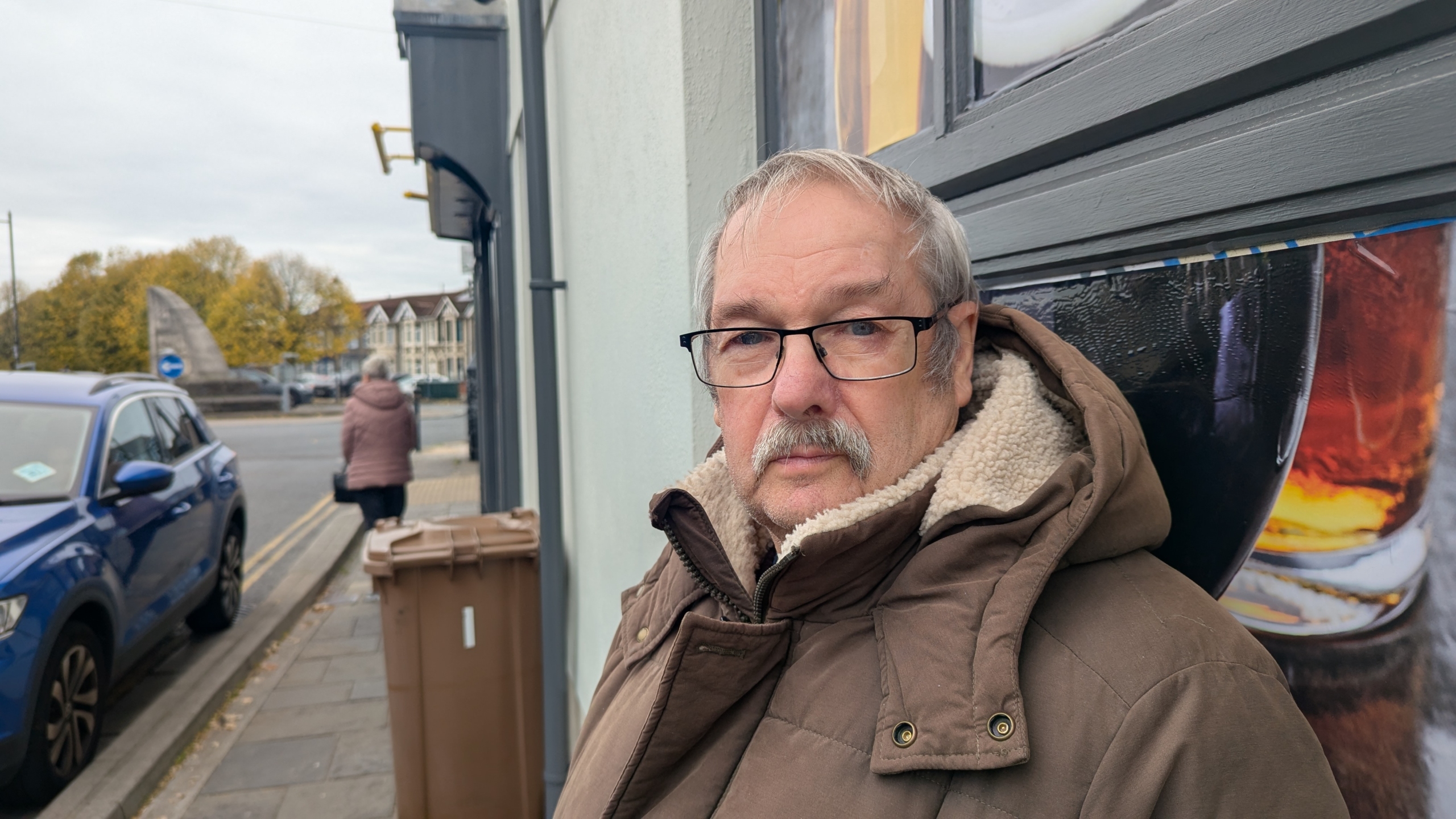
For his entire voting life – over sixty years – he has marked a cross next to the same party every time he’s filled in a ballot paper. But this election will be the first time ever that that party is not Labour. “I don’t think he [Starmer’s] a Labour politician. His manifesto, he just chucked that out of the window as soon as he walked into Number Ten,” Peter says. “He seems to be hitting the working class mostly.”
I am in Nelson, a village on the outskirts of Caerphilly county in the south Wales valleys, where a hotly contested by-election to The Senedd will take place this week. Labour has held the seat since the Welsh Parliament was created in 1999 and has won every Westminster election here for over 100 years.
But for Peter, pictured main, the party in Wales isn’t much better than Keir Starmer’s government. “[Welsh] Labour’s had twenty five years in power now and nothing seems to be getting better. Perhaps they need a change.”
He is far from alone it would seem. The latest poll for the constituency showed support for Welsh Labour at just twelve per cent, both Reform and Plaid Cymru vying for first place. Whilst national issues are playing a huge part in Labour’s drop in support, local concerns have also made people angry with the party. Peter, 81, voices real frustration at the Labour council’s decision to recently close the popular attraction Llancaiach Fawr Manor, with the loss of twenty jobs.
“It was voted one of the best UK visitor spots in the United Kingdom and they closed it,” he says in exasperation. Peter goes on to explain that the council have also tried to close Nelson’s community library, which has only remained open because the decision is subject to a judicial review. “It’s a very well used library…We’re in a little village and we seem to be getting hit with everything now.”
Up the road at the library, the woman behind the desk explains that the space is well used beyond just the books that are available to borrow. There’s regular Welsh classes, Lego groups, a book club, scrabble, a computing course and a ‘knit and natter’ session.
Outside I meet Janet, a woman in her seventies who’s lived in the area for nearly forty years.
I first ask her what she thinks of the upcoming election. She pauses for a moment and says, “Well put it like this, I won’t be voting Labour!…I mean, Labour tried to close the library, and that’s all we’ve got in Nelson.”
Janet now lives on her own after her husband died of cancer, and sounds genuinely fearful that the library might close. “You meet people [at the library]. Especially when you’re living on your own, you need to see people to keep your brain active. And it’s a warm area as well when people are struggling to heat their homes.”
“They’re either staving us out because of the cost of living or freezing us because they stopped the winter fuel payments,” she adds. Janet’s contrast, between the warm library that could close and the cold home she is being forced to stay in, is a perfect summation for how so many people in places like Nelson seem to be feeling about politics at the moment.
It’s not just disillusionment but a sense of total betrayal. She voted Labour for around fifty years, but was angry at her husband being denied treatment because she says the funding wasn’t available. She leans in with real emotion. “And I’ll tell you something else. The very last thing my husband did…the week before he died, he went and voted Labour. And that’s the thanks he got!”
Whether Welsh Labour can be blamed for the lack of treatment is hard to prove, but it’s the tip of an iceberg made up of several grievances including the winter fuel fiasco and the threatened library closure which certainly can be laid at the party’s door. And whilst previously Labour would have pointed to the existence of a Tory government in Westminster that was tying their hands, this is no longer the case.

The demise of the Labour party in its traditional heartlands has been so well documented and long coming that it’s hardly newsworthy anymore, but it speaks to a rebellion against the political system that is creating an historic collapse of the two-party system that has dominated British politics for over a century.
Here in Caerphilly, that has created space for both Plaid Cymru on the left and Reform on the far right to capitalise. The two parties are neck and neck in the polls, with the latest survey putting Reform on forty two per cent and Plaid Cymru on thirty eight per cent.
In Nelson, the local pub has a large ‘Vote Reform’ banner draped across its outside wall with a picture of the party’s candidate, Llŷr Powell. I try to go inside and chat to the owner, but it’s shut.
There is often a lazy assumption across a lot of the mainstream media and the political commentariat that Reform are simply going to clean up in places like this and hoover up reams of ex-Labour voters. But that’s not necessarily the case. They might not vote for Labour, but many people still have what they describe as “traditional labour values.”
“My father was a miner all of his life… I was brought up with these values,” says Peter , describing himself as a socialist and life long trade unionist.
He thinks Nigel Farage will just say anything to get into power and doesn’t agree with the Reform leader about immigration. “If it weren’t for them [migrants], I think the National Health Service would have collapsed by now,” he says. He is still undecided about who to vote for, but he may lend his vote to Plaid Cymru.
Janet says she’ll definitely vote for Plaid and its candidate, Lindsay Whittle, who she describes “more for the local people.” She says she’s “not fussed” on Nigel Farage and he’s “all talk.”
Another man I speak to called Keith in his sixties talks about Nigel Farage going around the constituency with body guards, and this is enough to put him off the Reform leader. “You’re supposed to go out and meet the people, well who’s he [Farage] met? Only in selected areas and once they’ve set it all up for him…. it doesn’t come across right”
This sense that Farage is a politician mainly for the TV cameras (the opposite of his ‘real man’ image) appears to have some traction. But whether this will be enough to stop Reform winning is another matter.
The party has tried to make the election a referendum on whether Wales should be a ‘Nation of Sanctuary,’ a reference to the Welsh Government initiative that aims to support asylum seekers and refugees. Their candidate has proudly stated that he would vote against the very idea of Wales being a welcoming place to refugees. This stance itself has drawn a fierce backlash from some, with Llŷr Powell getting publicly lambasted on a BBC Question Time debate by a young man and his mother for pushing a viciously anti-immigration agenda.
“We’ve lived here all our lives, and I have never felt so unwelcome in my own home town as I do since your party came into Caerphilly with all the rhetoric that you bring in,” said the mother, Alison. “I have to say to my sons ‘please don’t go there’ and ‘please don’t do this,’ and quite frankly, Mr Powell, I blame you for that!”
The attack made waves across the media and gave added energy to Reform’s opponents.
The local Ukrainian community have been vocally opposed to Reform, organising a rally in Caerphilly in defence of the Nation of Sanctuary and pointing out that the scheme has mostly gone to helping Ukrainian refugees.
Anti racists with Stand Up To Racism held another rally in Caerphilly town, drawing in over 100 people to defend asylum seekers and refugees. The group have also been leafleting daily in the run up to the election, warning voters that Farage’s party is racist and urging them to vote against them.
The message seems to be getting through. One man in his thirties I spoke to in Caerphilly told me would never vote for the party because it was “politics based on hate.”
Llŷr Powell was also a member of UKIP’s notorious youth wing which has links to the far right and fascist groups and he has labelled the LGBT Rainbow flag as “absolutely disgusting.” He was also a close ally of Reform’s previous leader in Wales, Nathan Gill, who recently pleaded guilty to accepting bribes to make pro-Russia statements in the European Parliament. Whether this will cut through is another matter entirely. No one I spoke to mentioned the scandals surrounding Mr Powell.
Immigration did not appear to be at the forefront of people’s minds either, but there was nevertheless some opposition to ‘small boats’. When asked about immigration, Janet in Nelson started off by saying that everyone is struggling. “You’ve got two people in a family working and they’re having to go to foodbanks, I’ve never known that before. It’s really hard,” she says.
But then she asked, “Where are all these people [asylum seekers] going? Even our people can’t get a house to live in. And I feel so enraged about the soldiers and the veterans still not being able to get a house.”
However, Reform are also seeking to tap into people’s sense of disillusionment about the state of public services. In one leaflet, the party presents itself as pro-investment in the NHS and in favour of keeping free prescriptions. Down in Caerphilly, I meet Neil, a man in his fifties who describes himself as a previous Labour voter. When I ask who he will vote for this time, he says, “well Reform, obviously.”
Even though he describes Nigel Farage as “a bit of a prick” he says it’s time to try someone else. He’s not prepared to vote for Plaid Cymru because he says the party supported the 20mph speed limit, which he signed a petition against. “All my mates are voting Reform,” Neil tells me. He says he’s not interested in immigration, he’s interested in what they [politicians] have done for him, “and they haven’t done anything at all.”
“I retired three years ago and they gave me the winter fuel, then they took if off you the next year. That pisses me right off. It’s only a couple of quid but why take it off people like us,” he says with anger, singling out the UK Chancellor, Rachel Reeves. Other issues bothering Neil include not being able to see a doctor or get access to a dentist.
Half way through our conversation, unprompted, he suddenly says he has a lot of time for Lindsay Whittle, the Plaid Cymru candidate, but is torn because he felt the party worked too closely with the Welsh Labour government. “I’m like that at the minute,” he says, showing his wavering hand.
The fact that he is still undecided at this late stage shows just how close this election is set to be. Issues that have been building for years and years are weighing heavy on people’s minds, especially the cost of living, public services and the complete lack of accountability in politics. One issue that comes up more than any other to crystallise all this is Labour’s initial decision to axe the winter fuel allowance.
The winner on Thursday, whether Plaid Cymru or Reform, will set the tone for the upcoming Senedd elections in May next year. Whatever happens, there is a clear basis for a left wing challenge to Nigel Farage’s party, and that challenge will not come from Welsh Labour.