Two Years Of Genocide, Two Years Of Resistance
On the second anniversary of Israel’s unrelenting assault on Palestinian existence, SC Cook looks at the horror inflicted on the people of Gaza and their resistance to it, and how the global solidarity movement marks an historic turning point in their fight for freedom.
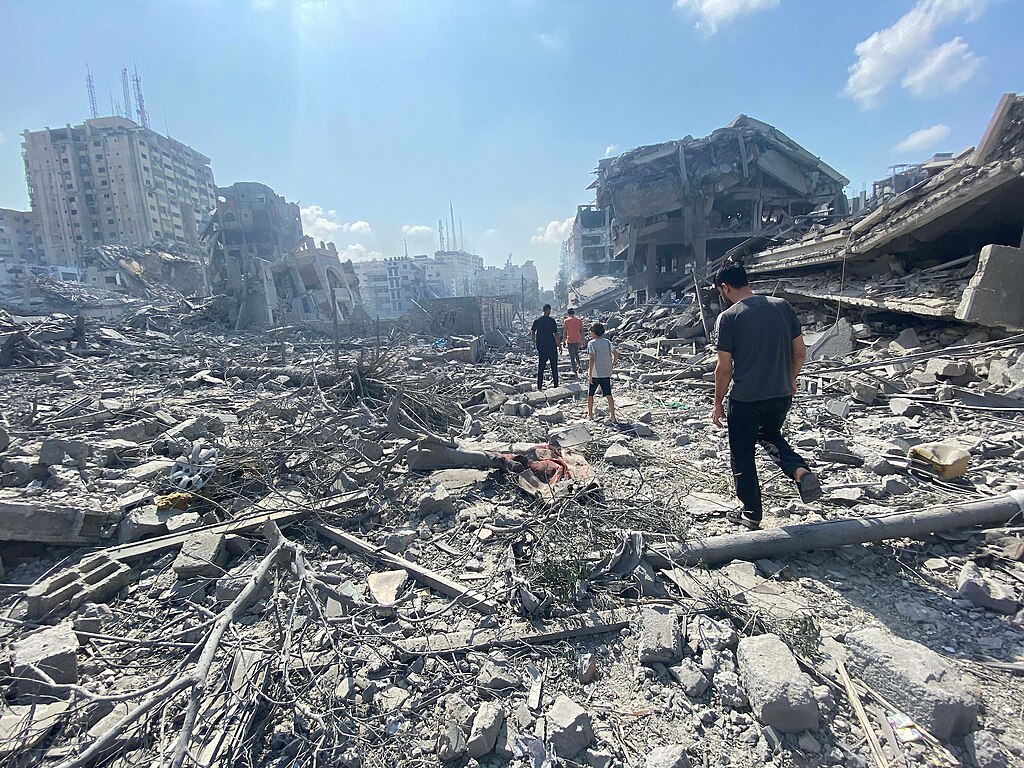
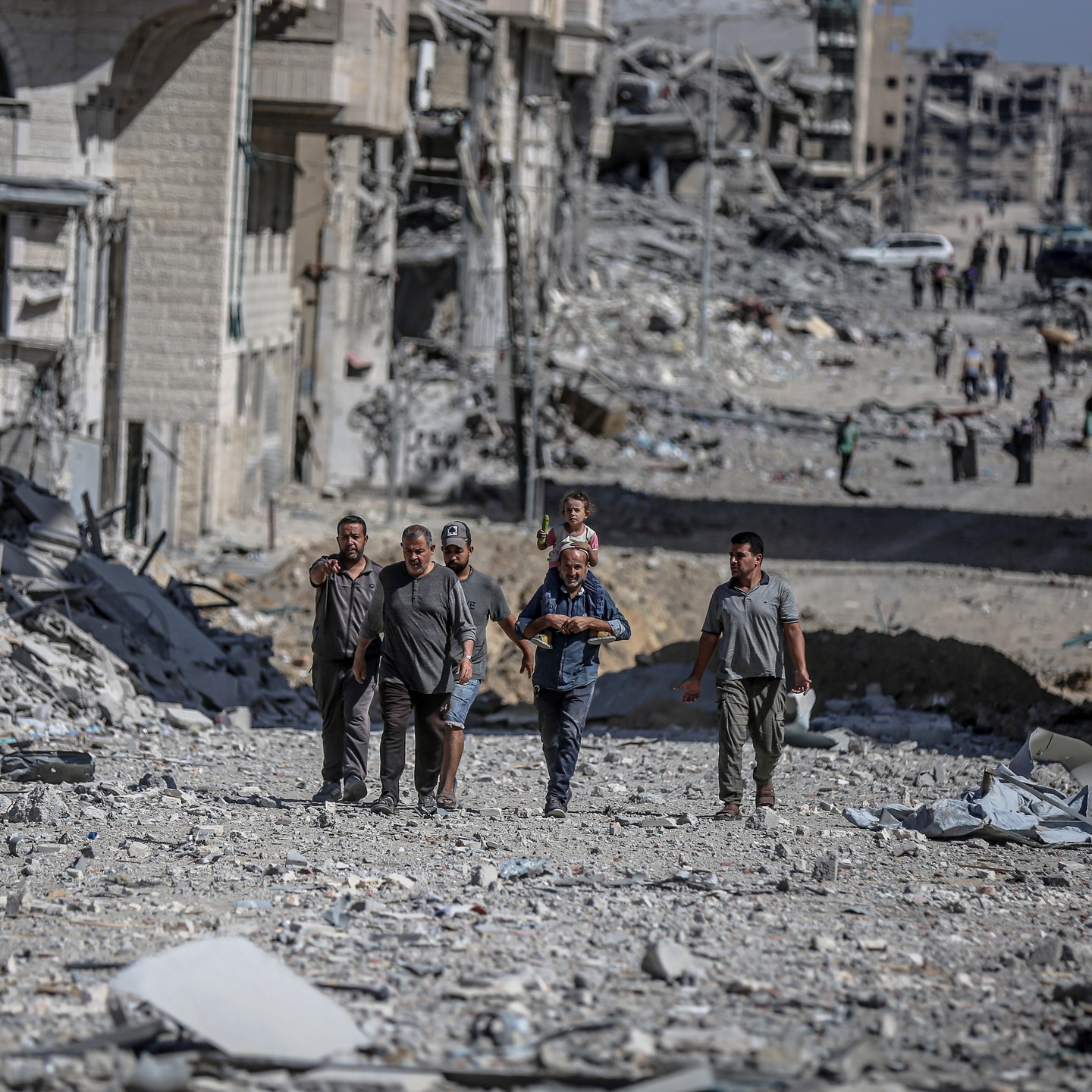
Cover image: Palestinians return to their homes in Gaza City following the partial withdrawal of Israeli troops, October 10th 2025. Photo by Said Mohmad
On the night of Wednesday 11th October, 2023, a huge crowd numbering around one thousand people descended onto the streets of Cardiff, bringing with them a mixture of outrage and shock.
Organised in a matter of days, the march was called in response to an Israeli military onslaught in Gaza like nothing the world had ever seen. In less than a week, at least 1,417 Palestinians, including 447 children, had been killed by Israeli air strikes.
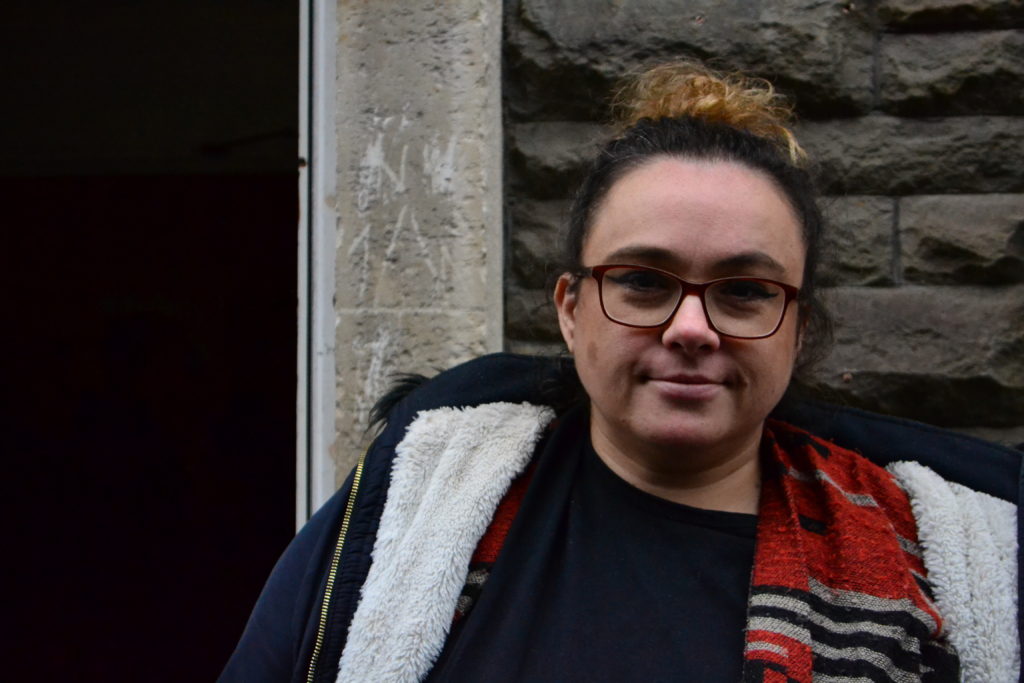
Taking part in the protest was a Welsh Palestinian woman called Alaa. As we marched down the street together with her child in a pushchair, she explained how her uncle and family, including their children, were all living in Gaza. Their home had just been destroyed and their area turned to rubble by the Israeli Occupation Forces (IOF). The family only just managed to escape before the airstrike hit.
“Their neighbourhood, the equivalent of central Cardiff, has now become rubble,” Alaa told me. “They went back to their home and it’s still standing, but the windows are all smashed. The doors are all gone and everything’s just…”
The family had spoken on the phone a only couple of days prior, just before Israel stopped access to electricity in the Gaza strip. “They had an hour before the electricity was going to be cut off,” Alaa explained. “So yeah, we had our conversation and wished them well, and there’s not a single inch of Gaza safe right now. Not an inch.”
She was right. Two days later, the IOF were preparing for a ground invasion and ordering around a million Palestinians to leave northern Gaza in just 24 hours, an impossible task.
One year on, whilst the reported death toll in Gaza stood at 42,612, the real number killed was estimated as high as 186,000. Almost 1000 Palestinian families had been wiped out completely over the course of twelve months. One home in Gaza was hit with explosives every four hours during that first year, a scale of destruction never before seen. 985 medical workers and 175 media workers were killed over the same time period.
According to Oxfam, Israel killed more women and children in a single year than any other army had for over two decades. One out of every hundred children in Gaza had been killed, according to Al Jazeera.
After two years, the official death toll in the enclave stood at 66,288 with 169,165 wounded, according to the Gazan health ministry. Around 20,000 children have suffered life changing injuries, including amputations.
But within these figures lie stories of specific acts of barbarism that should never be forgotten.
On 29th January 2024, five year old Hind Rajab was in a car with her uncle, aunt and four of her cousins. As the family tried to flee from their home in Gaza city, the car was immediately hit by Israeli fire and everyone was killed apart from Hind and her 15 year old cousin, Layan Hamada.
Layan made an emergency call to the Palestinian Red Crescent Society (PRCS). The first thing she said was “They are shooting at us. The tanks are next to us.” Then in just six seconds, 64 gunshots were fired at Layan and the line went cold. Israeli tanks were stationed less than 23 metres away and their operators had a clear view of both children in the car, an investigation by Forensic Architecture later revealed.
Five year old Hind was still alive in the car and at around 6pm on the same day, paramedics Yusuf al-Zeino and Ahmed al-Madhoun left Al-Ahli Hospital in an ambulance in an attempt to rescue her. But as soon as they arrived at the car, their ambulances were blown up and the pair were never seen again.
When the IDF finally evacuated the area two weeks later, the decomposing bodies of Hind, Layan and their family members were discovered. A few meters away, the burnt out ambulance was found together with the remains of paramedics Yusuf and Ahmed. In total, 335 bullets were fired at young Hind and Layan.
In the aftermath of October 7th, Israel was given the ‘green light’ by Western political leaders to do whatever it wanted, even if that meant committing war crimes on the Palestinian people. Keir Starmer was a de facto prime minister in waiting at this point, and he famously said that Israel ‘does have that right’ when questioned directly about the withholding of food and water.
The military wing of Hamas and other armed groups had made an unprecedented incursion into Israeli territory, killing both military personnel and civilians, and taking 500 people hostage. As the reported death toll rose to 1,200 people, comprising both Israeli citizens and high profile military figures, all eyes turned to Netanyahu and his administration’s catastrophic security failures.
This is what many believe that Palestinians in Gaza have paid the price for in the form of mass collective punishment – not for the deaths of Israeli citizens or the taking of hostages – but the humiliation of the Israeli state.
Thus the response of total annihilation was sanctioned by the US and its allies, including a compliant UK government, whose own interest in the world are tied to Israel. This paved the way for Netanyahu to act with absolute impunity regardless of pressure from international authorities.
Afterall, the massacre of five year old Hind and her family happened just three days after the International Court of Justice ordered Israel to prevent acts of genocide. The flour massacre, where hundreds of people were killed after Israeli tanks ambushed a crowd of starving Palestinians as they were crowded around an aid convoy, also took place after the order was issued. So did the bombing and burning of patients as they lay in beds at the Al-Aqsa Martyrs Hospital in the early hours of Monday 14th October.
Through this window onto terror, the eyes of Western leaders have stared. Not just unmoved by the endless bloodshed, but positively facilitating it through continued funding, arms sales and logistical assistance. And from here, support for Israel and the silencing of its critics has filtered out through the rest of the social establishment. Any pretence of a ‘rules based international order’ or some kind of moral code at the heart of the so-called liberal order has been completely shattered. Nowhere has this been more apparent than in the media.
When 5 year old Hind Rajab was massacred by Israel in the most horrific circumstances imaginable, the BBC wrote that she was simply ‘found dead in Gaza,’ completely airbrushing the decisive role played by one the world’s most advanced militaries in killing her.
Days earlier, the BBC covered the story and this time reported that Hind was ‘trapped under fire,’ but where that fire was coming from seemed a mystery. Israel was even absolved of operating the tanks referred to at the start of the article. This is, by now, a familiar pattern replicated across the western world, and even displayed in the pages of the liberal, supposedly progressive, press. When Palestinians were being denied water by Israel the Guardian headlined the story as if it could be a natural disaster due to drought rather than a forced blockade.
When Israeli tanks ambushed an aid convoy and opened fire into a crowd of Gazans in desperate hunger, killing over 100, the New York Times blamed Palestinians themselves, writing that “hungry civilians rushed at a convoy of aid trucks, leading to a stampede and prompting Israeli soldiers to fire at the crowd.” The BBC even appeared to distort an eyewitness account of the same incident to absolve Israeli forces of responsibility.
But whilst the political and media establishment has sought to downplay the true nature of the genocide, the tide of opposition has been completely impossible to contain.
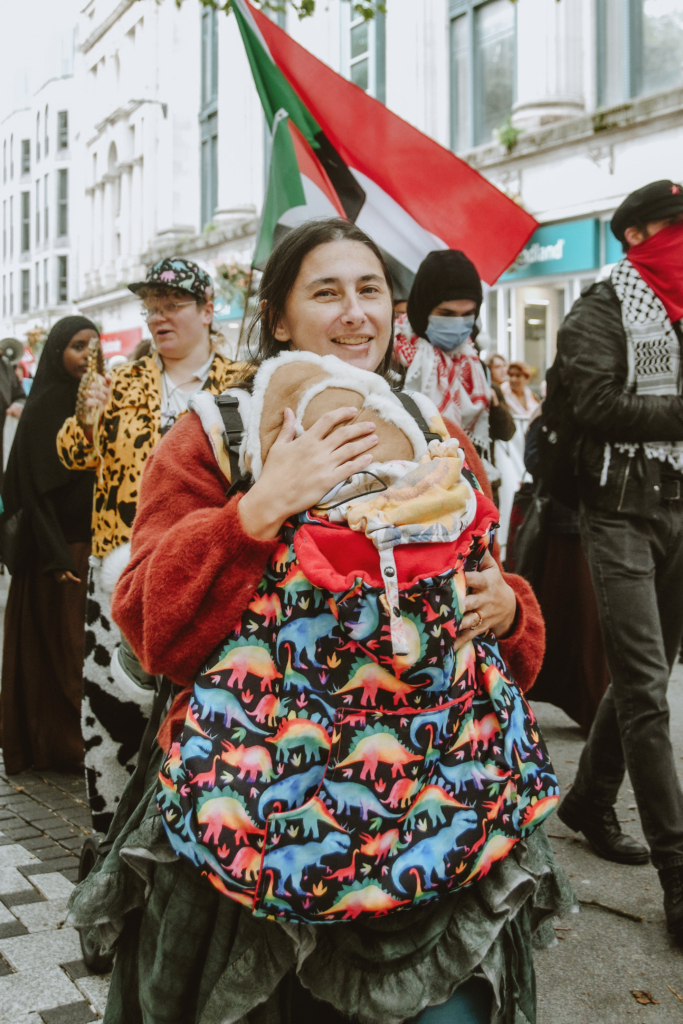
Given the scale of mass rebellion against Israel’s genocidal campaign and its Western state backers, it is almost impossible to give a true picture of its size and depth. Mass protests involving millions of people from small towns to major cities have erupted alongside militant direct action that aims to dismantle the Israeli military complex at source.
Attempts to reach the people of Gaza and deliver aid by sea have become the spearhead of this global solidarity movement. The most recent Global Sumud Flotilla, comprising over 40 vessels with 500 participants from more than 44 countries, was the largest civilian-led convoy of its kind in history.
On October 3rd, more than two million people took to the streets of Italy as part of a general strike called by a number of trade unions “in defence of the flotilla”, which 40 Italians had taken part in, and to “stop the genocide.” The historic strikes point to a powerful new front in global solidarity with Palestine and have rocked the Italian government, even forcing it to send a naval vessel in support of the flotilla.
Campaigns against Israeli brands, sports teams and products have taken on a life of their own, leading to a sense of toxicity with anything associated with the apartheid state.Thousands of arrests have been made with demonstrators often subjected to violent treatment by authorities across the West. But states’ inability to deal with the pro-Palestine movement has also been a defining feature of the past two years.
On 5th July, the British Parliament voted to proscribe Palestine Action under The Terrorism Act after the group successfully broke into RAF Brize Norton and sprayed red paint on a military aircraft.
The proscription was heavily criticised by the United Nations and others, but it soon became clear that enforcement of the ban – which also criminalises anyone who shows support for the organisation – was going to be almost impossible to implement.
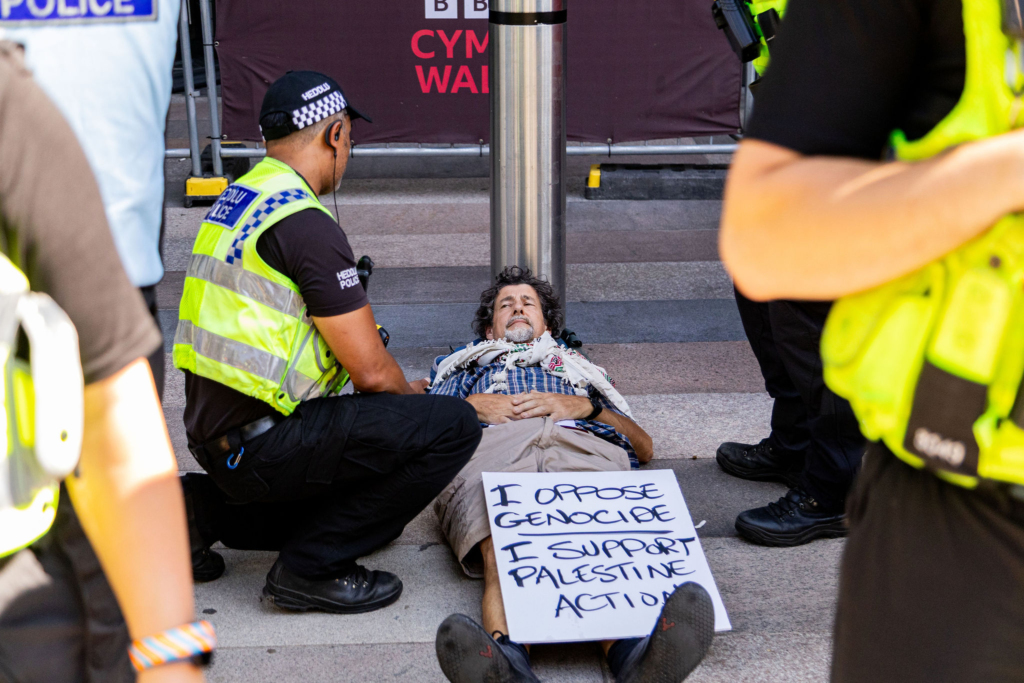
Just a week after the group was proscribed, demonstrators in Cardiff, London and Manchester held peaceful sit down protests whilst displaying placards in support of Palestine Action in open defiance of the ban.
Over 70 arrests were made, including two people aged 78 and 80 in Cardiff, whose front doors were subsequently smashed open as cops seized books and posters from their homes, according to Defend Our Juries – the group who organised the action. But the clampdown didn’t work and the number of people willing to break the law only grew larger as time went on. A week later, more than 100 people were arrested across the UK for similar actions.
After the ban had been in place for a month, 532 people were arrested for holding up the placards. Then in early September, police arrested a staggering 857 people at a protest in London for showing support for a proscribed group. Perhaps most striking of all was the protest held on October 4th, in the immediate aftermath of the deadly anti semitic attack on a Synagogue in Manchester. Under enormous pressure to cancel the action from the Metropolitan Police, the Home Secretary and almost every major news outlet in Britain, Defend Our Juries refused to back down. In the end, almost 1000 people joined the action and around 500 were arrested.
As with every protest, videos flooded social media showing elderly people with little mobility, and who are simply holding signs which read, ‘I oppose genocide, I support Palestine Action,’ being dragged away by the police. It has made a complete mockery of the government’s position.
The events recall those of almost two years ago, when the then Tory Home Secretary, Suella Braverman, tried to cancel a national Palestine solidarity protest in London on Armistice Day with a similarly frenzied mood in the British media.
The demonstration went ahead after the organisers – Stop the War Coalition and the Palestine Solidarity Campaign – did not succumb to the pressure. In the end, a staggering 750,000 people marched and Braverman was gone just a few days later.
It is a lesson that the new Labour Home Secretary, Shabana Mahmoud, seems unwilling to learn as she uses fresh authoritarian measures to combat a movement which has learnt how to effectively resist such attempts. After Mahmoud’s attacks on ‘repeat protests,’ 500,000 people took to the streets of London in a sign of how little authority her government has.
In fact each moral outrage, often neatly confected but highly ineffective, has failed to quell popular revulsion over Gaza.
After the Irish rap trio Kneecap were shadow banned by BBC and had terrorism charges brought against one of their members, Liam O’Hanna, it only had the effect of supercharging their support. Their Cardiff gig sold out within ten minutes whereas the case against O’Hanna collapsed.
This kind of resistance is hard to quantify and impossible to contain.
Afterall, how can you stop a performer at London’s Royal Opera House suddenly unfurling a Palestinian flag during a performance of Il Trovatore? One manager tried to, but his failed attempt at aggressively grabbing the flag off stage is symbolic of how the authorities are struggling to deal with the movement in general.
In Britain, the overall political ramifications are often underplayed in the mainstream but they have been highly significant, and could yet prove pivotal in the development of a left electoral challenge to both Labour and Reform. In the 2024 general election, Labour lost four seats to pro-Gaza independents and Keir Starmer himself lost almost 20,000 votes to the socialist Andrew Feinstein. And it is the Palestinian solidarity movement that has provided the most effective counterweight to the alarming rise of the far right over the past year, both in terms of numbers on the streets and building a credible political opposition.
But all of this is happening precisely because of the unrelenting nature of the genocide, which has created its own political crisis within nations whose governments have allied themselves to the state of Israel. There is no turning back and no return to normalisation is possible. Israeli officials at the highest levels have been clear that their aim is to destroy the very idea of a viable Palestinian existence. This will be vital to grasp in a period where a new ceasefire agreement has been presented as an historic breakthrough but the reality is that the occupation remains intact and Israel will continue to operate it with extreme violence.
At the heart of it all is the Palestinians themselves. Their survival under occupation, starvation, mass surveillance and bombing raids with the world’s most powerful weapons is the nucleus of global solidarity.
Health workers, relentlessly targeted, have never given up trying to save lives. Journalists have been assassinated by the IOF in record numbers yet have continued to don a press vest and show the world what is happening.
The images of the people of Gaza marching back to their cities after IOF troops partially withdrew were an incredible testament to the will of the Palestinian people. And as the two year anniversary comes and goes, and a new phase is ushered in under the ceasefire proposals, this daily resistance of Palestinians to one of the most brutal occupations in modern history provides the basis for continued resistance.
This is how one man from Gaza, Mohammed Jawad, described his own struggle over the past 24 months.
“On October 6, 2023, I turned 27 — not knowing it would be the last day before the genocide in Gaza began,” he wrote on social media on the eve of the .
“A year later, on October 6, 2024, I turned 28, holding my daughter, Rafif — the most precious gift I’ve ever had, born amidst the devastation.
And today, October 6, 2025, I turn 29. I will keep fighting, striving, and doing everything I can for Rafif and my family.
I share this day with you, my friends — not as a celebration of age, but as a testament to survival and the will to live.”