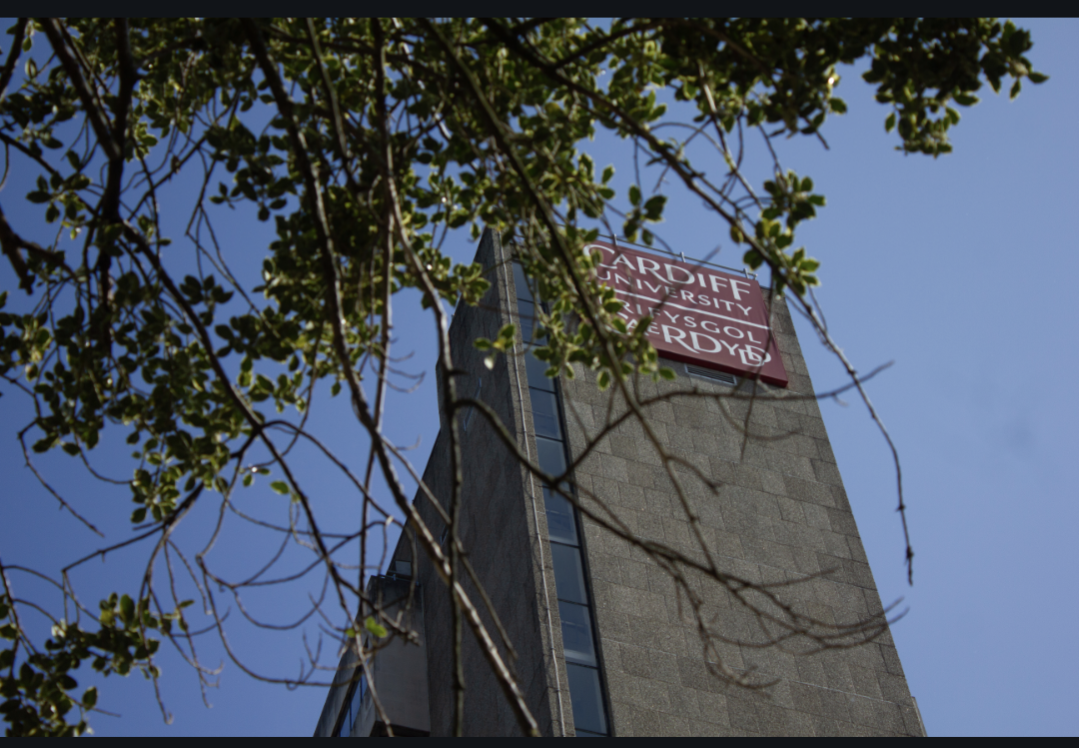
Union Representatives Given Just Twelve Minutes To Oppose Cuts By Cardiff University Bosses
Representatives of Cardiff University College Union were given just twelve minutes to present their critique and take questions over the “toxic” plans to drastically cut courses and jobs.
On Thursday, Cardiff University Council (the University’s supreme governing body) passed the final version of the University Executive Board’s (UEB’s) controversial “Academic Futures” cuts proposals.
However, the union representing the majority of the workforce who will be affected by the plans were only given a brief slot at a crucial meeting which voted to pass the measures.
It means that University bosses will now be able to carry out sweeping cuts that will see major departments and courses close.
The plans include:
Ending teaching and research in Ancient History, Religion, Theology, Portuguese, German, and Italian; Reducing student numbers in the teaching of Nursing, some languages, and Music (after initially planning to axe provision entirely); and Merging Welsh, English, Communication, Philosophy, Music, History, Archaeology and the remaining languages which weren’t cut entirely into a new School of the Global Humanities.
The School of Geography and the School of Social Sciences will be merged into the School of Human and Social Sciences.
The Schools of Physics, Earth Sciences, and Chemistry are to be merged into the School of Physical and Environmental Sciences; Computer Science and Maths will merge into the School of Computational and Mathematical Sciences.
Since the cuts were announced around 150 full time posts have also been made redendant, with around 80 further reductions planned.
Losses of co-workers through voluntary redundancy were also made in the Schools of Nursing, Medicine, Biosciences, Music, Business, Sociology, Geography, English, Communication and Philosophy, Chemistry, Maths, and Computer Science.
The University is planning further cuts, in addition to its “Academic Futures” plans, to the future of Professional Services support staffing in ways which will have wide-ranging implications for staff and students.
The University has reassured such staff, many of whom are represented by UCU, that the same cuts of cuts to academic provision will not be made to professional services. But the unions says that many fear their jobs will be downgraded, they will be made to apply for different jobs, or that there will be compulsory changes to their contracts.
The cuts were voted through despite the fact that last week, Cardiff University Senate (the body tasked with upholding academic standards) made clear its opposition, with not one member voting to recommend Council pass the proposals.
In response to the news that Council has passed the plans, a Cardiff UCU spokesperson commented:
“We are gravely concerned that Council hasn’t heeded staff warnings and appeals to slow down the implementation of these toxic and deeply unpopular proposals. There are serious questions about the independence of University governance bodies like Council across the UK and we are concerned that today was an exercise in rubber stamping management’s plans rather than holding the executive to account.”
“This is not the end. Under pressure from staff, students, and the broader community, management have already U-turned on some of the more damaging aspects of their original plans and agreed there will be no compulsory redundancies this year. We will continue to fight on behalf of our members’ jobs, conditions, and the academic disciplines being decimated with every tool at our disposal including consulting our members about future industrial action.”
Writing on the IWA website this week, a group of academics at Cardiff University criticised the plans as “an incoherent techno-future” that would “further undermine the faculty’s workloads and wellbeing at an institution that has already lost one overworked lecturer to suicide.”
The group laid bare the new model being proposed by the Vice Chancellor Wendy Larner and senior managers.
“Calling themselves ‘disruptors’, the executive board’s ‘Academic Futures’ strategy appears to focus on hunting commercial teaching and research contracts from global corporations, opening up ‘satellite’ campuses in Kazakhstan, Malaysia and Singapore trading on the Russell Group brand, and making a hasty and wide-eyed pivot towards technology. In Cardiff itself, the university is rolling out a quickly-cobbled run of new courses. This includes a new MA in AI and Digital Media Production that only requires a 2.2 in any subject for entry, running from September 2025. The programme lead job for this as-yet-undesigned course was still being advertised in April. In Astana in Kazakhstan, a new Cardiff University building has popped up in the last month between a Toyota dealership and a petrol station, and is now holding open days for $15,000 per year degrees in Exploration Geology, Business and Civil Engineering.”
The academics also spelt out the dystopian and bizarre nature of the plans:
“The “futures” internal proposals assume that our students will be both selfish (expecting “immediate satisfaction”) and chronically depressed: “what we now see as a mental health crisis will have normalised.” To manage this, our university disruptors propose that we adapt using now-discontinued Metaverse headsets, the possibilities of “neural-link teaching” (which doesn’t appear to exist), and AI, including AI welfare support systems for students. On the other hand, staff currently can’t make international calls from Microsoft Teams without making an IT request; our storage capacity is capped at 20GB; and we are being told to discipline students for using AI in assessments at the same time as the library search page suddenly adds an “AI research assistant” powered by ChatGPT.”