“When I Got There, She Was Sitting In An Armchair On The Rubble Of Her House” – Swansea Activist Dee Murphy On Israeli Apartheid & Her Arrest In The West Bank
On 31st May, seventy-year-old English teacher and grandmother Dee Murphy, a long-time resident of Swansea, was arrested at gunpoint by Israeli forces while on a humanitarian mission to the Occupied West Bank. She tells Rebecca Wilks about the “terrifying” human rights abuses she witnessed, and her encounter with a Madleen crew member in prison.
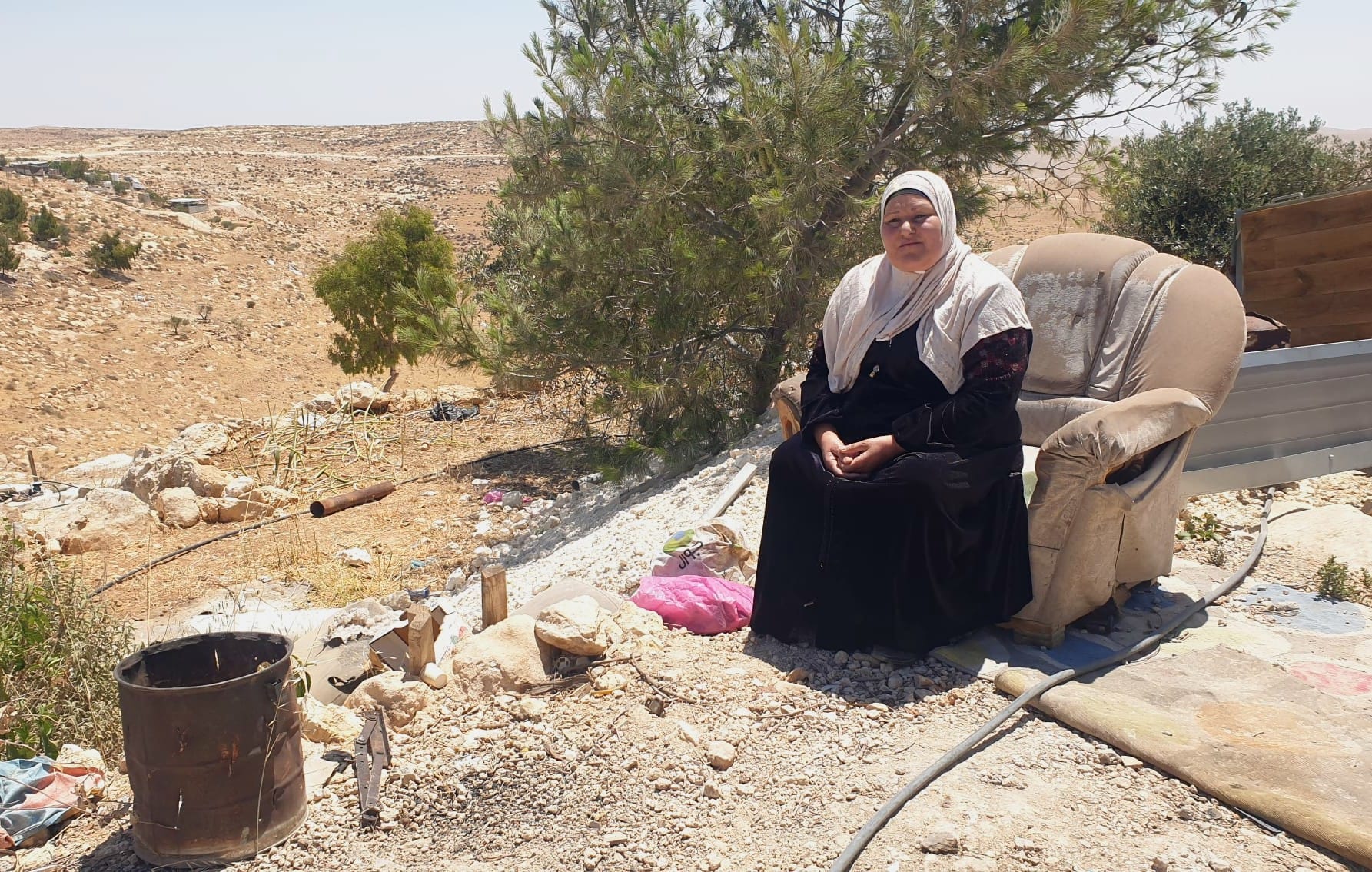
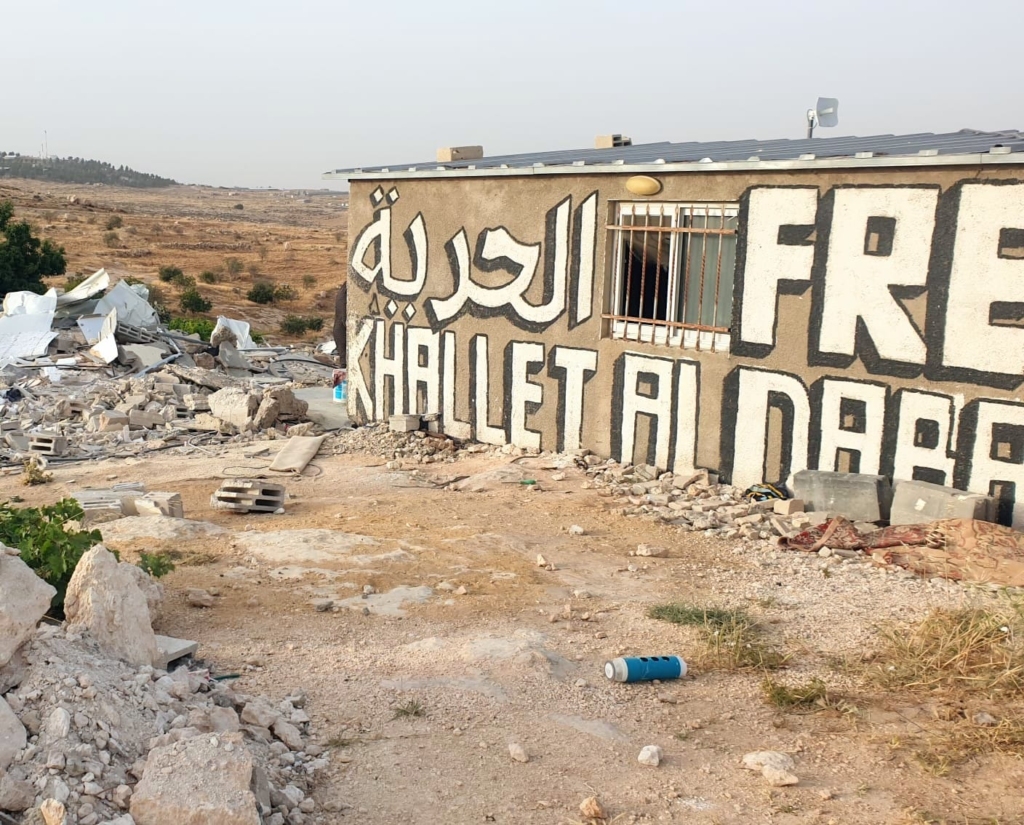
By Rebecca Wilks. Cover image: Dee’s friend, Leila sits on the ruins of her home in Khalet al-Daba’a, which was destroyed by Israeli forces. Image by Dee Murphy
Dee decided to visit Palestine in 2003, after attending a screening of the documentary Jeremy Hardy Versus The Israeli Army with a friend.
It followed the English comedian on a trip to the West Bank with the International Solidarity Movement (ISM), a group which arranges for international volunteers to stay with threatened Palestinian communities and document the daily human rights abuses they endure at the hands of Israeli forces.
Watching the bloody invasion and occupation of Iraq unfold despite countless protests, petitions, pleading letters to MPs and even direct action, Dee was deeply depressed – so when the film finished, and a call was put out for more volunteers to visit Palestine with the ISM, she leapt at the opportunity.
“I was out of my seat without a thought,” Dee recalls fondly.
“It seemed like something very immediate I could do, much more tangible.”
She has since been to Palestine on 10 occasions.
This summer, while volunteering in the embattled West Bank community of Masafer Yatta, Dee was arrested at gunpoint by the Israeli military. Charged with being in a restricted military zone, she was held in Israel’s Givon Prison for more than a week with almost no outside contact, sparking an international outpouring of concern. She was ultimately deported.
Located at the southern tip of the West Bank, Masafer Yatta is a cluster of twelve villages whose people have grown olives and herded sheep in the area for generations.
These communities fall within the 60% of the West Bank designated “Area C”, a region which – while legally Palestinian land – is nevertheless under total Israeli control. The movements and livelihoods of Palestinians in Area C are tightly restricted by the occupation forces, assisted by armed militias from Israeli settlements within the territory.
Those settlements are illegal under international law, yet enjoy both the funding and endorsement of the Israeli government. Around 700,000 Israelis now live in towns built illegally on Palestinian land, including sitting Cabinet Ministers.
In the 1980s the Israeli Government declared part of Masafer Yatta was to become a military training ground, named “Firing Zone 918”. Existing residents were told that they could stay, but a decade later were issued with expulsion orders for “living illegally in a closed military zone”. Their homes and property were either confiscated or destroyed.
Roughly 20% of the West Bank has been designated a “Firing Zone”. Classified documents have since confirmed that these zones were created in order to seize land and “prevent expansion of the Arab villagers”. The government is explicit that its intent is to annex this territory.
Determined not to abandon their ancestral home, and with nowhere else to go, the more than 1100 Palestinians that remain in “Firing Zone 918” – half of them children – live in constant fear, subjected daily to extreme intimidation and racist violence.
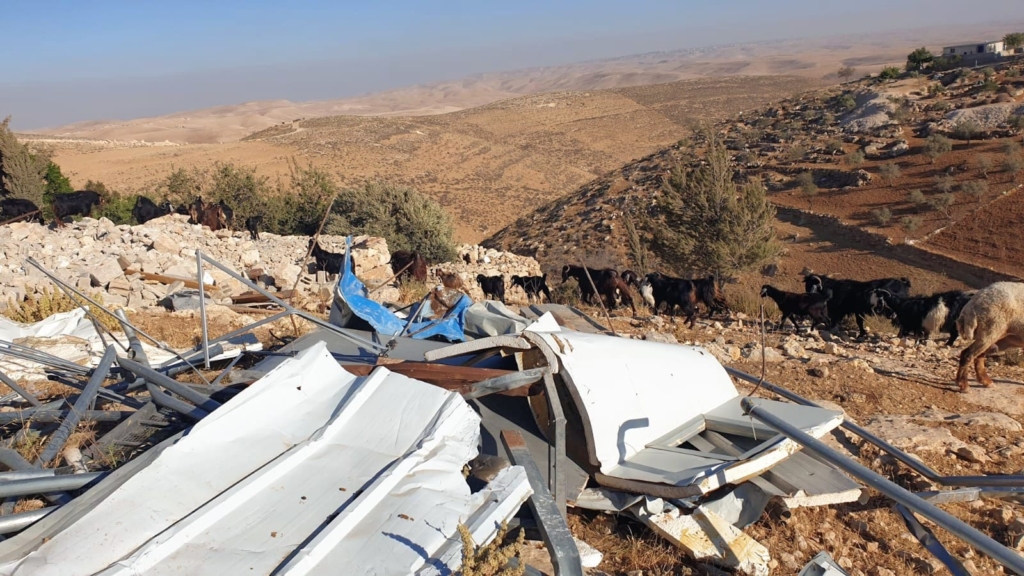
In contrast to the rapidly expanding Israeli settlements, Palestinians living in the area are not allowed to build any structure without permits, which are nearly impossible to obtain. House demolitions, enforced by armed soldiers, are a fact of life, meaning many people resort to living in caves. Schools and playgrounds, painstakingly built in secret at night, are also torn down. Animals belonging to Palestinians are stolen or slaughtered, water supply lines are cut, and decades-old olive trees are burned.
The situation was the subject of a recent Oscar-winning documentary, “No Other Land”. The day following the film’s award win, Masafer Yatta resident Hamdan Ballal, who co-directed the film, was abducted and beaten by the Israeli military. In late July, 31 year old dad of three Awdah Hathaleen, a local teacher and filmmaker who also worked on No Other Land, was murdered by an Israeli settler.
During the film, Tony Blair is shown briefly touring a Masafer Yatta village in his post-Prime Ministerial role as Middle East Envoy. The visit lasted just minutes, yet it was reportedly enough to pause demolition orders for the school and homes in the streets where he’d walked. “This is a story about power,” narrator Basel Adra observes.
In an attempt to chip away at this enormous power imbalance, ISM volunteers like Dee hope to provide a protective presence while staying with Palestinian families.
“It’s a Palestinian-led organization,” Dee says.
“Communities tell us where there’s a need for solidarity and documentation, and we go.
“I’ve been to Masafer Yatta five times now in the last three years, because that’s where the need is most immediate.”
On her first visit, Dee helped build a wall around a community garden in At-Tuwani, a village on the edge of Firing Zone 918, because Israeli settlers had taken to driving quadbikes over the plants. On other visits she assisted in the olive harvest – frequently a flashpoint for racist attacks – and carried out buckets of rubble during the construction of residential caves.
She’s formed cherished friendships with many in the community, along with her fellow ISM volunteers. “It can be a beautiful experience,” Dee tells voice.cymru.
“I’ve spent Christmas watching Syrian soap operas with one family in the village – you’re just thankful to be in such a stunning place with such incredible people.“The situation is so intense that I think you form those relationships quicker. “You’re all together in a traumatic situation, so the bond is very strong.”
Violence against West Bank Palestinians has risen sharply since the onset of Israel’s genocidal siege of the Gaza Strip. According to the UN Office for Humanitarian Affairs, at least 647 Palestinians in the West Bank were killed by Israelis between January 2024 and June 2025 alone, including 121 children. A further 5,269 Palestinians – 1,029 of them children – were injured.
Settlement expansion – and therefore, the destruction of Palestinian homes and infrastructure – has also escalated. The Israeli Government recently announced it would be proceeding with its controversial “E1 Settlement” plan, a vast housing development that would cut the West Bank in half – thereby preventing the establishment of any future Palestinian state.
“They will talk about a Palestinian dream, and we will continue to build a Jewish reality,” Finance Minister Bezalel Smotrich said at the launch. He added: “This reality is what will permanently bury the idea of a Palestinian state, because there is nothing and no one to recognize.”
Though accustomed to the hostility levelled at Palestinians in the West Bank and their supporters, Dee says the escalation in recent years has disturbed her. “There’s so much more fear now – justified fear,” she says. “People get taken and beaten, sometimes they come back, sometimes they don’t.”
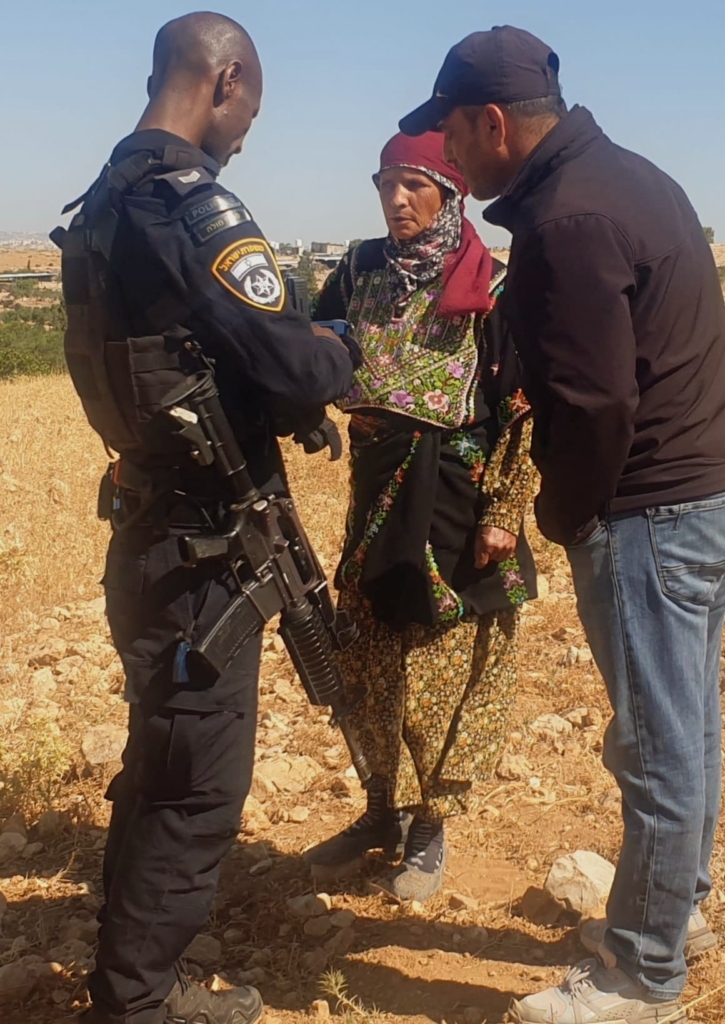
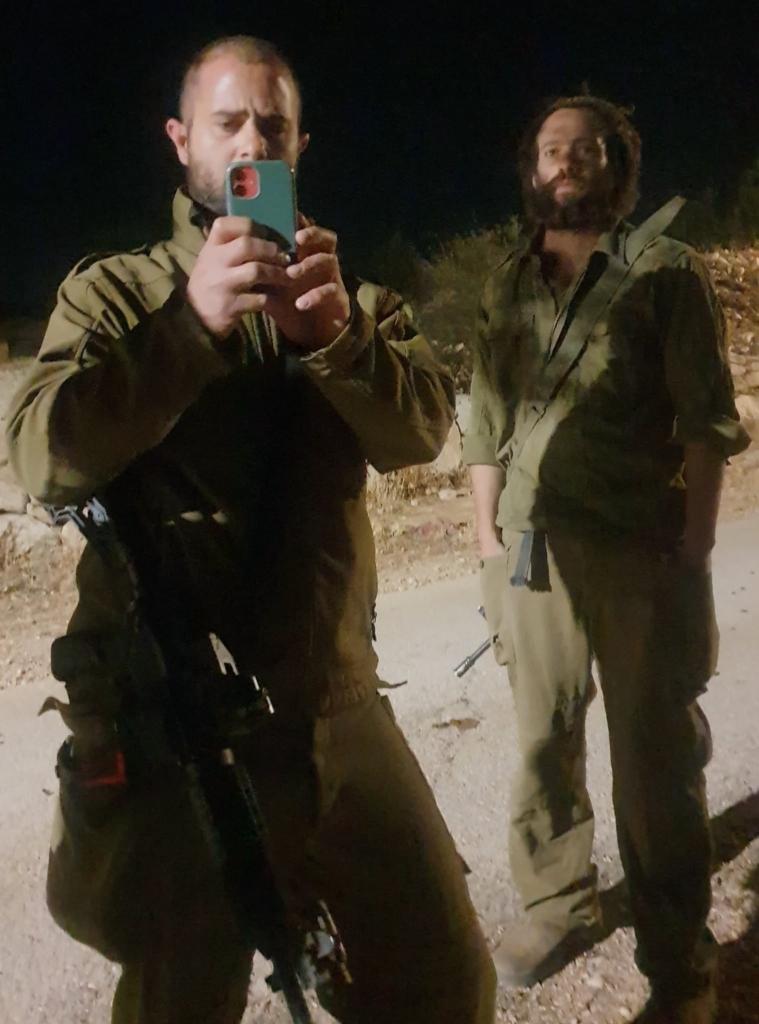
Since 2021, Dee has spent much of her time volunteering in Khalet al-Daba’a, a particularly vulnerable Masafer Yatta village of approximately 120 residents. She witnessed Israeli soldiers terrorise the small community with arbitrary night-time raids.
“It was about 1am and they got everyone in the village out of bed, including little toddlers, and had people show their ID,” she remembers.
“They were a terrifying sight, armed to the teeth with these intense blue lights on their helmets. “They said they were doing a ‘census’.” It was in Khalet al-Daba’a a’aba that Dee was arrested.
Towards the end of May, Israeli forces had destroyed all but four structures in the village, further demolishing water tanks, sanitation facilities and nearly all of the residents’ solar panels. Buildings once decorated with murals both defiant and despairing – “Let Me Live My Life” one implored – lay in ruins.
“It’s very difficult for me to speak about it,” Dee says. “When I got there, my friend Leila – she’s a grandmother too – was sitting in a big old armchair on the rubble of her house.
“That’s all that was left. It was heartbreaking. “I started to brim up, and she just smiled and said ‘Dee, this is occupation, this is what it looks like.’”
She and fellow ISM activist Suzanne Bjork, 48, then got word that an elderly couple had been forced out of their residential cave by settlers, who had immediately begun using the couple’s home as a sheep pen in an attempt to establish an outpost there.
Some carrying out the attack were young, unarmed teenagers, a trend Dee has noticed increasing as settlers become evermore emboldened by a culture of total impunity.
“At this point, they know they’re untouchable,” Dee says.
“One boy, he must have been about 14, spat in this old man’s face. “He put his finger over my phone camera and said ‘I can fuck you up’, then tried to pull off a woman’s hijab. “I’ve got grandchildren his age – it was so horrible to see.”
Suzanne and Dee spent the night in Khalet al-Daba’a – “it’s not safe to walk the roads at night anymore ” – sleeping in one of the few structures still standing. Suzanne’s phone had been stolen by a settler, and the pair intended to visit a police station in Hebron the next day. In the morning, however, Israeli soldiers smashed in the door and forced them out at gunpoint. The two were ordered to leave the village, but when they tried to comply, a settler militia prevented them from doing so.
Their passports were seized, and Border Police arrested and transported them to Ben Gurion Airport, Tel Aviv, where Suzanne was deported immediately.
Dee, wishing to fight her deportation order in court, was transferred to Givon Prison. There, her access to legal counsel was repeatedly impeded by Israeli authorities. When she arrived at Givon, the phone number she’d had for her lawyer was confiscated. After several days without communication, Dee borrowed a phone card from a fellow prisoner and was able to call home for the first time.
“Out of the blue, I remembered my sister’s landline number,” she says.
“I told her, please ring the embassy, and please ring my lawyer, tell her I don’t have a number.”
After repeated calls to the prison service by her lawyer, Dee was passed a contact number, which turned out to be incorrect. She was brought to a hearing and processed without legal representation.
A few days into Dee’s imprisonment, the Freedom Flotilla ship Madleen, which was attempting to deliver vital humanitarian aid to Gaza, was illegally intercepted by Israel over international waters. The 12 volunteers on board were abducted and transported to Israel against their will, with eight detained in Givon Prison.
Unable to sleep one night, Dee saw guards hurrying a young woman along the corridor outside her cell. Early the next morning, she managed to sneak over to where the woman was being kept. It was Yasemin Acar, a member of the Madleen’s crew.
“We put our hands on the glass, and then were able to have a brief conversation through the vent in the door,” Dee remembers. “It was a lovely moment.”
Yasemin remembers the encounter vividly. It happened after she and her cellmate, fellow Madleen crew member and French-Palestinian MEP Rima Hassan, had been “violently separated” and placed in solitary confinement for writing pro-Palestinian messages on the wall.
“From the moment that we were kidnapped, they’d told us Palestine doesn’t exist, that there was no genocide, no starvation,” Yasemin tells voice.cymru
“Rima was thrown into a hellish cell, of course, because she is Palestinian, and I was left alone in our common cell. “That morning, I was exhausted but hopeful when I heard a knock on my cell door.
“There was Dee, smiling in the window – a smile full of light and solidarity. “She told me her story, and how proud she was of us. “She urged me to stay strong, and I told her the same. What she had done and endured was in the name of justice. “Her presence filled me with gratitude, and for the first time in days, a smile.”
Dee stresses that, while unpleasant, her experience does not approach the suffering endured by the 10,400 Palestinians from the West Bank and Occupied East Jerusalem – hundreds of whom are children – currently held in appalling conditions at Israeli prisons, many on spurious charges.
The state does not reliably release data on its prison population, but at least 3,127 of those prisoners are estimated to be under “administrative detention”, meaning that they have not been charged with any crime at all. Around fifty of these prisoners are children.
A decade ago one section of Givon Prison itself was converted into a juvenile wing to house the spiralling number of Palestinian child prisoners. A report by Save The Children last summer warned that starvation, physical abuse and sexual violence against Palestinian minors in Israeli prisons – a persistent issue for decades – was increasing.
When Dee was eventually able to speak with her lawyer, she was advised that fighting her expulsion would mean a further 6 weeks in prison to wait for another hearing. She made the difficult decision to accept deportation, and returned home. She is now banned from returning to Israel, which means she also cannot enter Palestinian territory.
“It’s broken my heart,” she says.
“I can’t even think about it, to tell you the truth. I can’t accept it.”
Dee’s since thrown herself into giving talks about what she witnessed in Masafer Yatta, finding comfort in getting the word out, and in the support and dedication of Swansea’s pro-Palestine community. She’s still in regular contact with Leila, her friend in Khalet al-Daba’a. They hope they’ll one day be reunited in a free Palestine.
In July 2024, the International Court of Justice ruled that Israel’s presence in the West Bank and Gaza is unlawful, that its policies within the region amount to forced displacement, annexation, and apartheid, and that states across the globe are obligated not to render assistance that might support their continuation.
The UK Government has made almost no move towards complying with the ruling. Though a small number of arms export licenses to Israel were suspended in September 2024, the UK continues to supply components for the state’s F-35 fighter jets, used extensively in its carpet-bombing of the Gaza Strip, and official figures show that exports of military equipment to Israel actually increased between October – December 2024.
The Ministry of Defence is reportedly close to awarding Israeli arms firm Elbit Systems a £2bn training contract, and surveillance flights over Gaza continue to depart from the UK’s RAF Akrotiri base in Cyprus.
Here in Wales, First Minister Eluned Morgan was recently accused of misleading the Senedd after it was revealed that the Welsh Government awarded a £500,000 grant to Senior Plc, a company known to export military equipment to Israel.
The FM had previously assured the Siambr that no government funding had been given to firms that export arms to Israel since October 2023.
The Welsh Government asserts that the funding was provided to the automotive branch of the company, in order to safeguard jobs.
“The company has confirmed that none of its defence work takes place in Wales,” it said in a statement to voice.cymru.
A Freedom of Information request submitted by Amnesty International found that the Welsh Government does not conduct human rights due diligence checks before awarding public money to private companies. The human rights charity called on the government to change its policy.
The Welsh Government said: “Our procurement processes have recently changed, including clearly outlining when suppliers can be excluded, such as for fraud, bribery, unethical practices and national security risks.”
The true death toll of Israel’s bombing campaign in Gaza is difficult to ascertain, but experts estimate around 90,000 people have been killed. This excludes deaths from illness and starvation. The Israeli military’s own data suggests that 83% of casualties have been civilians.
Though left with almost nothing, families in Khalet al-Daba’a remain “steadfast on their land”, the ISM told voice.cymru. “Families are currently living in makeshift tents and in caves while the outpost that was illegally established on the village land has been dismantled.
“Their homes have been demolished many times throughout the years, and they have tried to rebuild despite an apartheid regime which denies them any type of freedom and security. The group is still recruiting for volunteers to support people across the Occupied Territories.
“We urge people around the world to join us in Palestine – especially now,” a spokesperson said. Dee encourages anyone distressed by the ongoing genocide to get involved in local organising efforts, noting that her friends in Masafer Yatta were heartened by the growth of pro-Palestinian movements across the globe.
“My friend Hafez told me – ‘we don’t have expectations, but we always have hope.’
“Keep moving, keep that hope.
“If people in Palestine can do it, so can we – we have to.”
Information on joining the ISM is available here: https://palsolidarity.org/join-ism/
You can donate to support the group’s work in Palestine here: