Abandoned: How Labour’s Century Of Power Came Crashing Down In Wales
Over the past ten years, Seb Cook has been speaking to voters from across the former coalfields of south Wales about the place they live and the political system that is supposed to represent them. After the party’s shattering defeat in the Senedd elections last month, where these voters abandoned Labour, he reflects on those discussions to understand just how an unparalleled period of political power came tumbling down. This is the story of Welsh Labour’s downfall as told by the people who delivered it.
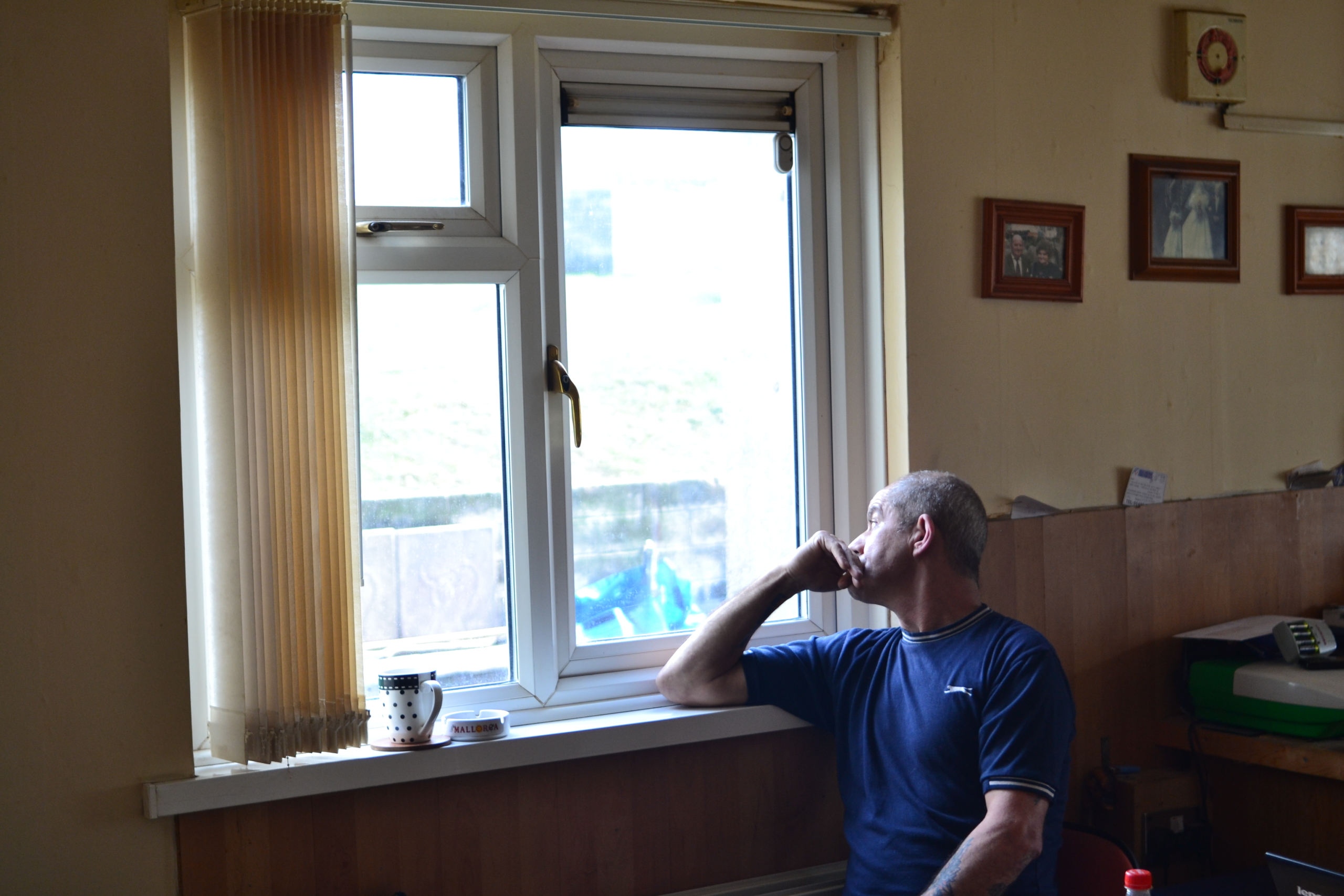
By SC Cook. Cover image, Terrance from Betws, south Wales, by SC Cook.
One hundred years. If you have heard only one thing about Labour’s record of electoral dominance in Wales, it will have been this.
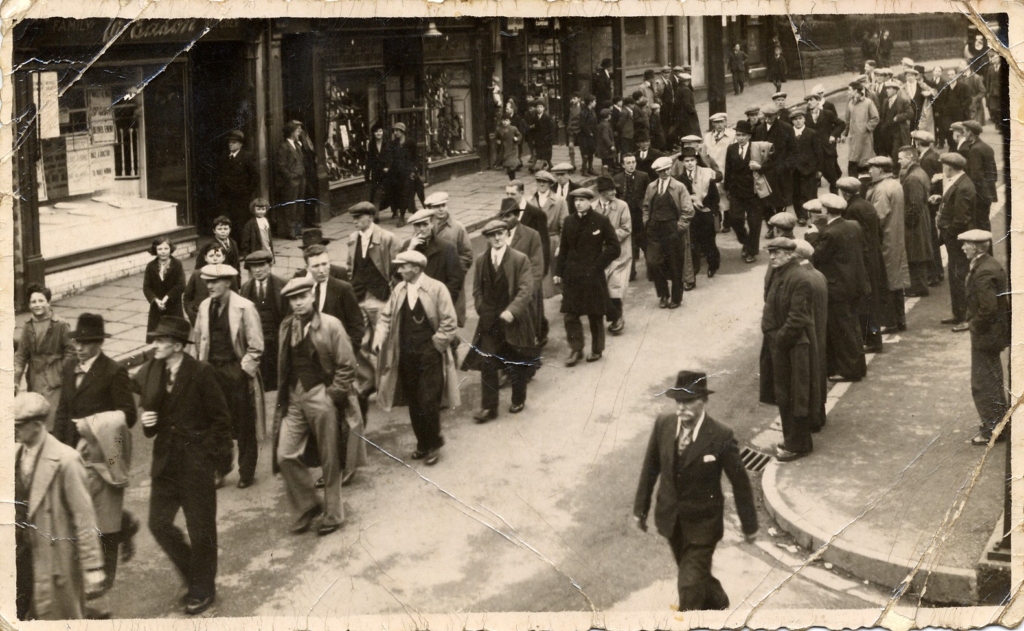
Since the general election of 1922, when the party won 18 out of 36 Welsh seats in the UK parliament, Labour has won a plurality of votes in every national poll since. Even in the fateful election of 1931, where Labour slumped to just 52 seats UK wide after the formation of a national government, the party’s base in the south Wales coalfield remained uniquely solid.
But despite the fact that this electoral longevity is widely known about, the reasons behind Labour’s unrivalled command of Welsh politics have barely been mentioned. It was in the industrial powerhouse of Merthyr Tydfil that Keir Hardie, who in 1900 became an MP for the new Independent Labour Party, fired the starting gun on Labour’s entire political history.
That was the same year that the South Wales Miners Federation, known as the FED, reached a union membership of 127,894, which translated to an astonishing representation rate of 87% of all miners in south Wales.
We shouldn’t romanticise the history of the Labour Party, but parliamentary socialism in Britain is deeply rooted in the party’s relationship with the working class of Wales.
In an historic moment in 1908, 74,675 members of the FED, a large majority of unionised workers, voted to affiliate to the Labour Party over the Liberal Party.
In the ensuing two decades, these same union members would have been involved in some of the greatest acts of industrial militancy in Welsh history. These included the Tonypandy riots in 1910, the Llanelli rail strike of 1911, the militant coal field strike during the First World War and of course, the general strike of 1926, where in the Tredegar area alone, 20,000 miners walked out.
It was in this exact time and place that a 19 year old coal worker going by the name of Aneurin Bevan became head of the local Miners Lodge.
Bevan was responsible for distribution of strike pay in Tredegar and for forming the Council of Action, a grassroots workers organisation key to building solidarity. Three years later, Bevan became a Labour MP and the rest is history. But Bevan is just one well known example of Labour’s relationship with the militant working class of south Wales. Another is George Smith.
Born into a family of ten siblings, Smith left school at 13 to work at Ammanford No. 1 colliery (Gwaith Isa’r Betws), before becoming the secretary of Ammanford Trades council, setting up a branch of the Independent Labour Party and then becoming President of the South Wales Miners’ Federation (‘the Fed’) in 1934.
Smith became a Labour MP for Llanelli, a site of major industrial struggle, in 1936. A decade later, after World War II, he was made Minister for National Insurance in the transformative Labour government led by Clement Attlee.
In this capacity he introduced the new Industrial Injuries Act, the National Insurance Act and Family Allowances. The latter was a piece of welfare legislation that introduced a non-means-tested, government payment that went directly to the mother not just for the first child, but for every subsequent child. It was the first universal welfare provision in the post-war state.
Of course, we shouldn’t romanticise the history of the Labour Party, but it’s nevertheless important to realise that parliamentary socialism in 20th century Britain is deeply rooted in the party’s relationship with the working class of Wales. That’s what makes the Senedd election result even more startling.
Because almost 100 years after Smith’s election in Llanelli, Labour slumped to just 8% of the vote in the constituency in which the town now sits. There will be no Labour representative for Llanelli in the new Welsh Parliament, an astonishing turn of events.
In the constituency now containing Bevan’s Tredegar in the Senedd, Labour was unable to secure enough votes to win a single seat out of a possible six.
Alun Davies, the party’s candidate who narrowly missed out on securing the final seat in Bevan’s old constituency, described the dramatic wipe out of the Labour vote: “I kept asking people, where are the Labour votes? There were areas being counted that we knew were strong Labour areas, but we just couldn’t see any Labour votes.”
Now of course the modern Labour party, whether in Wales, Scotland or England is nothing like that of 100 years ago. But that’s been true for much of the past fifty years. In that time, and especially since the 2008 financial crash, there has been immense political upheaval across the Western world, with historic left parties collapsing across Europe. Yet Labour has endured in Cymru, winning 37% of the vote in the 2024 General Election and 40% in the previous Senedd election in 2021.
Abandoned heartlands
So why did the 2026 Senedd election deliver such a decisive defeat for the party? The reasons are naturally complicated but the result, whilst being dramatic, has also been a long time coming.
Having spent the last ten years speaking to people across Labour’s (now former) heartlands, often about their views of the party, a few reasons stand out.
One of the strongest causes which emerges from these interviews is the deep sense of loss and decline within these areas. People can see with their own eyes that their community is falling to pieces. And it’s not just high streets. It is things like play areas for children, where equipment has been broken for years and not replaced, or the fact that social infrastructure like youth clubs or libraries have just disappeared entirely.
The other key, related factor is poverty, which is often grinding and unrelenting. Within this is the shocking rate of child poverty in Wales, which now stands at around 32% of all children in Wales and 40% of under 5 year olds.
I’ve interviewed many people about this topic, usually mothers, and it never gets less shocking. I remember talking to a woman who lived on £5 a day and who had no hot water. She was forced to give her child a cold bath on their birthday.
It would be inaccurate to blame all of these things on Welsh Labour. Without dwelling on it (because it’s not the purpose of this article), it is still worth pointing out that Welsh Labour has delivered progressive policies. These range from free bus passes for older people and free prescriptions for all, to refusing academies and keeping NHS privatisation at bay.
But when a party has been at the helm of both Welsh Government and local councils throughout a period where these areas have suffered decades of neglect, there can be no surprise when it is eventually punished. The era of neoliberal capitalism, which saw mines and industry brutally shut by Margaret Thatcher, was swiftly followed by the post-2008 austerity era.
And particularly since 2010, Labour in Wales have helped to manage this period of austerity and the associated social decline it has brought. If not the originators, Welsh Labour politicians were the primary enforcers of budget cuts, far too willing to pass them down rather than risk their careers trying to stop them.
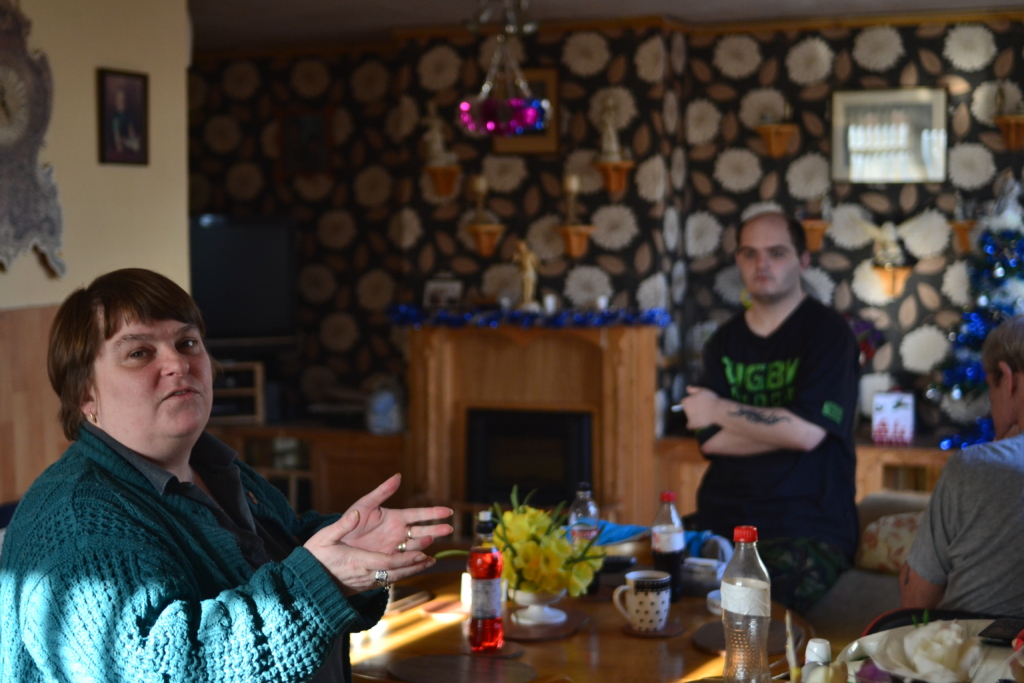
I first witnessed the effects of all of this back in 2015 when I spent some time with a family, pictured, main, in Betws, a former mining community near the Garw valley, who were suffering the effects of the notorious bedroom tax. The policy cost the family an additional £120 a month, while also forcing them into facing eviction. Unable to even afford things like a new pair of shoes or a haircut, Kay, the mother, was furious at the Tory government for making her even poorer.
But despite the fact that her father was once the secretary for Ray Powell, the Labour MP for Ogmore from 1979 until his death in 2001, Kay retained no faith in the party. “I don’t trust Labour, I don’t trust any party,” she told me.
These were early warning signs for the party, and they would only get stronger as time went on.
One student got up and said, “We know each other and care about each other and we want our school to stay.” But the council drove the cuts through.
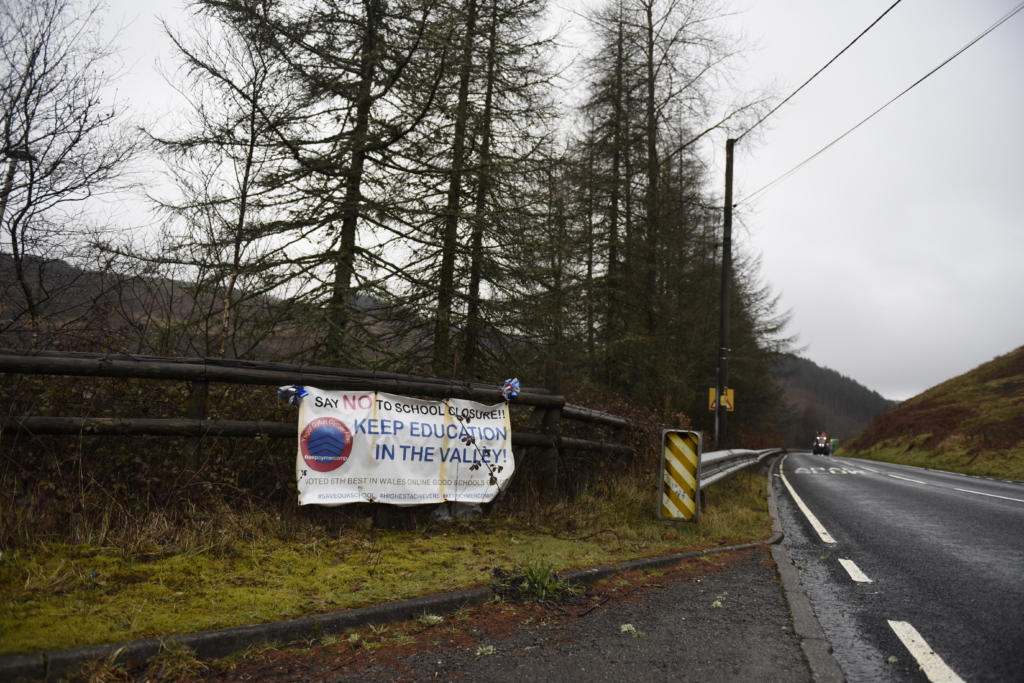
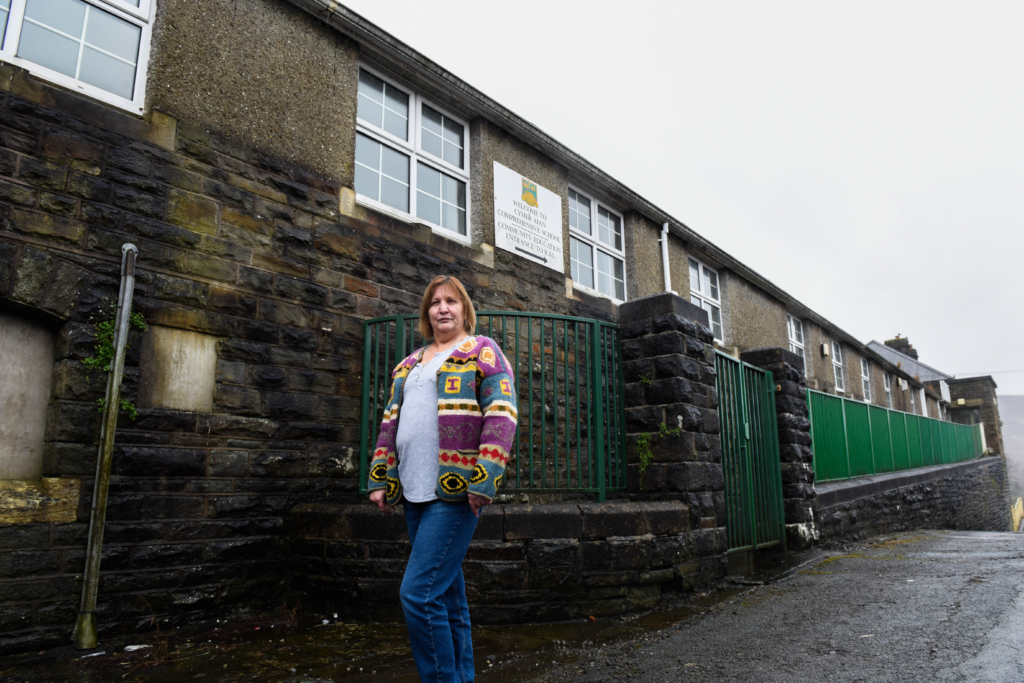
In February 2019, about a year and a half after Labour had recorded one of its biggest ever votes in a UK general election, I visited Cymer, a small community in the Afan valley, South Wales.
The place was chosen completely by chance, but the stories we heard there provided a stark warning about what was coming down the line in Welsh politics.
Brexit was still fresh in the memory, delivered in no small part by large votes in places like Cymer. But from across the desk in the small community library, Melanie Emmet told us that it was other issues which were at the forefront of people’s minds.
The library itself had recently had its funding completely cut, despite being well used, and was now run by volunteers like Melanie.
The community was just about to lose its high school, too, and with it any sense that Cymer had a future at all. A food bank had not long since opened in the library, and was already desperately needed, even by people who were in work. “They seem to be picking on this place, picking on these valleys. There’s been massive, massive cuts.” Melanie told us.
The decision to close the library and the school had been taken by the local Labour council. “There was a fight,” Melanie told us about the community effort to save the library. “We had 100 people in here. They were up in arms, but it got us nowhere.”
It was the same with the school, with 433 written objections to the closure being received by the council. People travelled to a mass meeting against the plans. “People came from three valleys,” June, a local parent, explained. One student even got up and said, “We know each other and care about each other and we want our school to stay.”
But the council drove the cuts through. When June made the case to the Future Generations Commissioner and the Welsh Labour Government, she was politely dismissed. A judicial review also failed. The local Labour MP, Stephen Kinnock, didn’t want to know.
What came through so powerfully was a feeling of complete disempowerment, that no matter what they said or how strong their case was, it was as if they had already lost. This was coupled with a very real belief that things were only getting worse and that young people were being failed.
In the nearby village of Glyncorrwg, where she lived, an independent councillor called Nicola told us that the only activity provided for young people now was a play area.
She contrasted this with her own youth: “Growing up we had the youth club that was open every night.” In the holidays, they had a summer camp in the school “for the whole six weeks.” Now, local kids wouldn’t even have a school. It’s not hard to see why people were in a state of despair.
But Nicola had decided to become a councillor because she had “had enough of everything being taken away from the village and nobody really fighting our corner.” That last point about having no one to fight on your behalf is critical.
These communities had consistently elected Labour to defend them, yet now witnessed their representatives accept the logic of austerity and wield the axe against local services. The claim of being powerless didn’t wash when it was local authorities and on occasion the Welsh Government who were the bodies legally responsible for making these decisions. And it wasn’t only happening in Cymer, either.
I once witnessed a Labour councillor in Caerphilly excuse himself from a vote on whether or not to close the leisure centre which sat in his own ward. Instead of voting against the closure, he self-declared a conflict of interest because he had in the past used the leisure centre and therefore could be biased. He just upped and left the room, even though no one had asked him to.
The local people who had attended in the hope of saving their precious facility were flabbergasted.
If your local Labour representative can’t even defend your public services, what is the point of them? But this was indicative of a wider problem that affected all parts of Welsh Labour, even left figures like Mark Drakeford.
Mark Drakeford and The Ely Riots
After the Ely riots, which followed two teenage boys on bikes being killed after being chased by the police, I spoke to an experienced youth worker at the site of the memorial, who described the steady erosion of the provision over several years.
“The youth service was cut by millions, so loads of people lost their jobs,” she told me in May 2023, explaining how one entire youth centre had been forced to close.
“We used to have 60 or 70 kids a night coming in there, and it was the hardcore kids of Ely. But now it’s like..there’s not much for them to do. A lot of them struggle. It is a poor area.” But who was the Senedd representative for Ely for the entirety of this time? It was Mark Drakeford, who at the time was also the First Minister.
After the riots, Drakeford chaired a high level meeting to discuss the situation in Ely with senior figures, including the Labour MP Kevin Brennan, the local Labour Councillor Russell Goodway and the Labour Leader of Cardiff Council, Huw Thomas. Without necessarily intending to do so, the meeting itself revealed an awkward truth: at every level, Ely was represented by Labour.
But speaking after the riots, Drakeford hit out at what he called “13 years of erosion” and “budgets reducing every single year” under a Tory government in Westminster. These statements are not untrue, but the example is incredibly telling. Did Drakeford really think that neither he nor any of the other Labour representatives had a role here? Did they have no power to stop these cuts?
Just like the councillor in Caerphilly, it was unwittingly sending a clear message – we are useless in the defence of your community. Of course, people felt angry and betrayed, but they felt arrogantly dismissed by politicians and civil servants in Cardiff Bay, too.
When parents in Cymer tried to use the Well-being of Future Generations Act, hailed by the Welsh Government as a landmark piece of progressive legislation, to save their local school through a judicial review, it failed.
The Future Generations Commissioner at the time, Sophie Howe, decided not to intervene. The lawyer representing the parents called the act “virtually useless” given that it was designed to protect the future generations of places like the Afan valley.
But this didn’t stop Ms Howe appearing in The Guardian or on Radio 4’s Women’s Hour, at the same time as schools and youth clubs were being shattered, to be lauded as a progressive beacon and a ‘minister for the unborn’, a phrase she has since used herself to describe the role. When it came to defending the future generations of Cymer, however, the unborn didn’t seem to matter too much. Afterall, their voices could be politely ignored and would never find themselves on national news programmes.
But this disparity between the public projection of a ground-breaking, progressive Labour government and the stark reality on the ground where communities were being ripped apart wasn’t lost on people. In fact, it bred a deep sense of bitterness that became a powerful political tonic.
Undoubtedly, this also went beyond Labour and fed into anger towards anyone seen as part of this failed political establishment, a sentiment that played a key role in Brexit. I’ll never forget the reply a 60-year-old, Leave-voting woman in Tredegar gave me when I asked her about the EU money that had been invested in the area, a line often trotted out by Welsh Labour figures campaigning for Remain:
“Well, where is it!?” she asked, “They’ve taken the industries from the valleys; they’ve replaced the steelworks and sewing factories with lots of little companies that just exploit people.”
The answer was informed by the experience of her sister, who at 52 years of age worked 60 hours a week in a small factory nearby and brought home under £300 a week.
The problem for Labour was that they came to be seen, like the EU, as guardians of a system that was failing people. The party’s inability to deal with a section of their base voting Leave is another key reason behind their long-term decline.
The interesting thing is that whilst a lot of these conversations took place, Labour’s vote on the whole held up. After all, they retained most of their core seats in Wales even as they badly lost the 2019 election. It was a similar story in 2021 and 2024.
This was because Welsh Labour still retained some degree of social democratic identity, mainly due to its pre-2010 policies of free prescriptions and free bus travel for older people. And the Tories were the government in Westminster, and lots of voters pointed the finger at them instead.
The Jeremy Corbyn interregnum, which saw Labour become anti-establishment and espouse radical left politics, also arrested the long-term decline of the Labour vote, particularly around the 2017 general election. So whilst there was anger at Welsh Labour throughout this entire period, lots of people were still voting for the party.
“They’re either starving us out because of the cost of living or freezing us because they stopped the winter fuel payments.”
A reckoning in Caerphilly
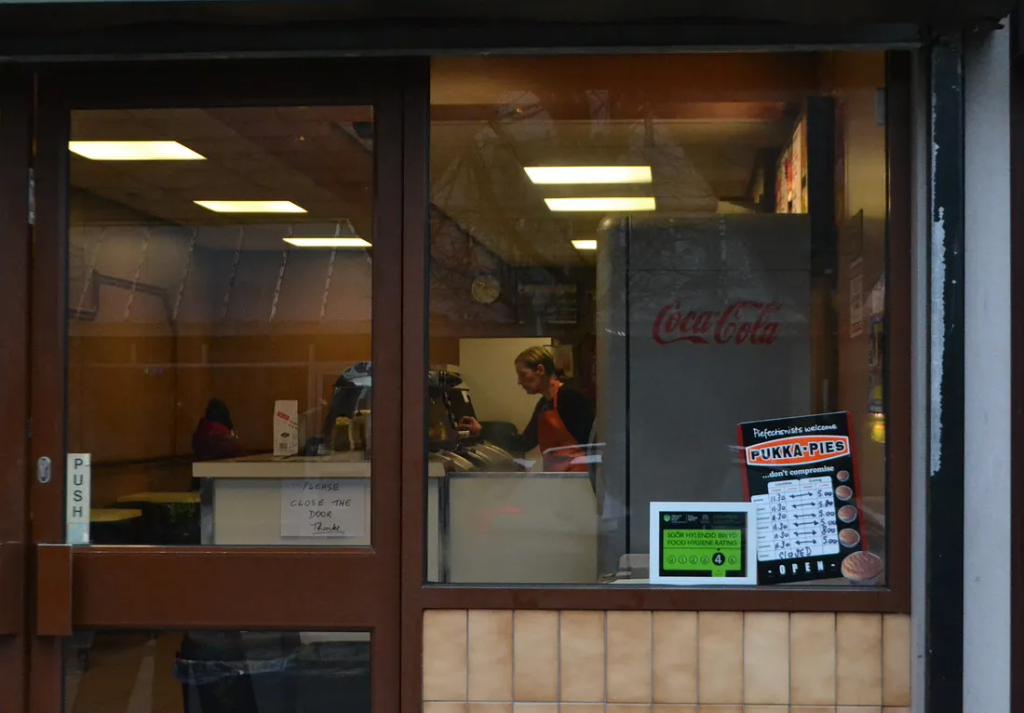
The first time I saw that change significantly was when I went to the small village of Nelson, Caerphilly, at the end of 2025 to cover a crucial Senedd by-election.
The reluctant Labour voters had all but disappeared and had been replaced by people who despised Keir Starmer and Rachel Reeves, particularly over the attempt to cut winter fuel payments for older people. Crucially, they also saw no real point of difference between them and Eluned Morgan, the Labour First Minister.
The local library, well used by various community groups, had been earmarked for closure by the local Labour council. A popular local tourist attraction had also been shut without warning. Just like that, there would be one less place people could visit for free and have a nice day out.
“He [Starmer] seems to be hitting the working class mostly,” said Peter, a lifelong trade unionist in his eighties who had previously always voted Labour.
But it wasn’t until I spoke to a woman in her 70s that it really hit home what was going on with the Labour vote.
A widow, she too was deeply upset about the closure of the local library, one of the few places that she went to socialise now that she lived on her own. She made another point: it was warm there. “They’re either staving us out because of the cost of living or freezing us because they stopped the winter fuel payments,” she said.
Then she leaned into me to tell me something deeply personal with a burning political anger. Just before her husband had died, she said, he had gone out and voted Labour. “And that’s the thanks he got!”, she said through gritted teeth. It was as if everything had come together to create a total sense of betrayal.
This level of anger simply has to go somewhere. It might be able to be contained, dismissed or ignored for a period of time, but ultimately it will make its presence known.
May 7th was that day in Wales.
a party hollowed out
Welsh Labour were due a defeat at the ballot box, but the manner of the defeat cannot be separated from what has happened since the 2024 general election.
The cutting of the winter fuel allowance and the indefensible response of senior Labour figures to the genocide in Gaza, and a general lurch to the right, have shattered the party’s vote. Yes, there has been anger over the 20mph speed limit and the Vaughan Gething fiasco, but these are not comparable to the more fundamental causes detailed above.
Had Welsh Labour been able to separate itself from the Starmer leadership, it might have staved off such a humiliating result. But this would have meant headline grabbing attacks on Keir Starmer from the Welsh Labour leadership. It would have meant taking political risks and being controversial by calling for him to resign, among other things.
This approach simply doesn’t seem to exist in Welsh Labour, however, and the party has moved further towards the UK leadership. The assault on the left of Labour and the undermining of internal democracy by the Starmer operation have had the side effect of hollowing out the very idea of a distinct party in Wales.
The deselection of Beth Winter, one of the only socialist MPs in Wales, was an early example. Then, in the General Election of 2024, came the imposition of pro-Starmer loyalists in solid Labour seats such as Cardiff West and Swansea East, despite opposition from local members.
The end result of this process has been even greater subservience to Starmer and the Westminster party machine. Ideologically, Welsh Labour have looked bereft. The party has become synonymous with managerialist politics and a crop of MSs who seemed more interested in their careers than they did about the people they were elected to represent.
Towering figures like Bevan and Smith were replaced by politicians whose names most voters don’t even recognise, so minimal was their impression.
Perhaps one of the most striking aspects of Welsh Labour’s record is not what they did but what they didn’t do about one of the most critical issues facing the country: child poverty. In 2015, the Welsh Government announced a plan to eradicate child poverty by 2020. But in the five years that followed, child poverty actually went up and the target was quietly scrapped. In many ways, the story of the 2026 Senedd election was written right there.
So, as the dust settles, what might the future hold for Welsh Labour?
It’s unclear but maybe we should look to Scotland for answers. There, the party has not been completely wiped following the mauling of 2015. They are still in the mix, but at the end of the day, they are just another party.
For a century in Wales, Labour was the party. That won’t ever be the case again.